

Board Performance · 2025
In this section15 topics
- Compliance Monitoring — Overview1 item
- Prevention of Conflicts of Interest4 items
- Prevention of the Use of Inside Information5 items
- Anti-Corruption6 items
- Whistleblowing5 items
- Selection of Directors & Chief Executives7 items
- Selection of Independent Directors3 items
- Director Development3 items
- Evaluation of Board & Subcommittee Performance3 items
- Subcommittees2 items
- Meeting Attendance & Remuneration5 items
- Supervision of Subsidiaries & Associated Companies6 items
- Board Duty Performance — Overview1 item
- Audit Committee Duty Performance2 items
- Executive Committee Duty Performance1 item
Compliance Monitoring — Overview
Monitoring of Compliance with Other CG Policies & Guidelines
The Company places strong emphasis on good corporate governance. It has established policies, principles, and practices in a structured manner under its Corporate Governance Policy and Code of Conduct, covering directors, executives, employees at all levels, as well as its subsidiaries. The Company focuses on effective implementation, alongside continuous monitoring, evaluation, and improvement, in order to elevate its operational standards in line with international best practices and to build confidence among all stakeholder groups.
During the past year, the Company has systematically monitored and evaluated compliance with its corporate governance policies and practices, covering key areas as follows:
1) Fair Treatment and Human Capital Management
The Company is committed to fair, transparent, and non-discriminatory human resource management. Policies on recruitment, performance evaluation, development, and promotion are based on merit and performance. The Company also promotes a work environment that respects diversity, inclusion, and human dignity. Throughout the year, these policies were communicated via training programs, new employee orientation, and internal communication channels. Monitoring was conducted through complaint mechanisms and internal assessments. No material cases of discrimination or labor rights violations were identified.
2) Fair Competition Practice
The Company conducts its business in compliance with applicable laws and fair competition principles. Directors, executives, and employees are required to avoid practices that may lead to market dominance, price manipulation, or unfair treatment of business partners. These practices are communicated through the Code of Conduct, and key business transactions, including partner selection, are subject to appropriate review processes. Monitoring results indicated no violations of competition laws or unfair trade practices.
3) Environment, Health, and Safety (EHS)
The Company recognizes the importance of responsible business operations toward the environment and society. It has established guidelines on efficient resource utilization, waste reduction, and environmental impact prevention, as well as ensuring occupational health and safety for employees and stakeholders. Safety measures, workplace inspections, and continuous training programs are implemented and regularly monitored. No significant incidents related to workplace accidents or environmental impacts were reported.
4) Information Security and Data Governance
The Company prioritizes effective data management and information security by implementing policies and controls over data access, storage, usage, and disclosure. These are aligned with the principles of confidentiality, integrity, and availability. Access control is enforced based on job responsibilities, with monitoring systems in place to oversee data usage and mitigate cybersecurity risks. Employee awareness programs are conducted on an ongoing basis. No material data breaches or cybersecurity incidents were identified.
5) Monitoring and Continuous Improvement
The Company has established mechanisms to monitor compliance with its policies through relevant functions, including internal audit and responsible departments, with regular reporting to management and the Board of Directors as appropriate. Policies and practices are also reviewed and updated periodically to align with evolving laws, international standards, and the changing business environment. Based on the monitoring results for the past year, the Company has effectively complied with its corporate governance policies across all areas. No violations of good governance principles or incidents with material adverse impact on the Company were identified.
The Company believes that these practices form a strong foundation for enhancing transparency, credibility, and organizational resilience, thereby supporting sustainable and high-quality growth in the long term.
Prevention of Conflicts of Interest
Has the Company Acted to Prevent Conflicts of Interest?
Yes
Operations in the Past Year
The Company has established a clear policy and guidelines on the prevention of conflicts of interest and continuously monitors compliance to ensure that its business operations are conducted with transparency, fairness, and in the best interests of the Company and its shareholders. The policy applies to directors, executives, and employees at all levels, including subsidiaries, and requires that any person with a vested interest must not participate in the consideration or approval of related transactions.
During the year, the Company implemented concrete measures to monitor, control, and review compliance with the policy, with key practices as follows:
Directors, executives, and employees are required to disclose their conflicts of interest and those of related persons, and to abstain from participating in the consideration or voting on any matters in which they have an interest.
Related party transactions or transactions that may give rise to conflicts of interest are reviewed in accordance with the regulations of the Securities and Exchange Commission (SEC) and the Stock Exchange of Thailand (SET), and are subject to approval by the Audit Committee and/or the Board of Directors, as appropriate, under normal commercial terms.
The Company Secretary is responsible for ensuring that newly appointed executives submit declarations of conflicts of interest upon assumption of their positions.
New business partners are required to disclose any relationships or connections with the Company through a self-declaration form to mitigate risks of conflicts of interest.
Employees and executives are required to disclose relationships with counterparties, and the Company provides ongoing communication and training on the Code of Conduct and corporate governance policies.
All personnel, including new employees in 2025, representing 100%, have acknowledged and agreed to comply with the Company’s policies.
Based on the monitoring and review conducted during the year, no incidents of non-compliance or material conflicts of interest were identified, and no complaints or whistleblowing cases were reported in this regard.
In addition, the Company regularly reviews and updates its policies and practices, with the Board of Directors required to review them at least annually to ensure alignment with applicable laws, good corporate governance principles, and evolving business environments. Overall, the Company believes that these measures enhance transparency, strengthen credibility, and improve governance effectiveness, while mitigating risks associated with conflicts of interest and supporting sustainable business operations in the long term.
Number of Conflict-of-Interest Cases — Introduction
During the period 2023–2025, the Company did not identify any cases or issues related to conflicts of interest, with a total of zero cases reported in each year. This reflects the effectiveness of the Company’s policies, control measures, and governance processes in preventing and managing conflict of interest risks in a consistent and appropriate manner. The Company believes that such performance contributes to enhancing transparency, credibility, and good corporate governance, and supports sustainable business operations in the long term.
Number of Conflict-of-Interest Cases
| Metric | Current Year | Previous Year | Two Years Ago |
|---|---|---|---|
| Total number of cases or issues related to conflicts of interest (cases) | 0 | 0 | 0 |
Prevention of the Use of Inside Information
Introduction
The Company has established clear policies and guidelines to prevent the misuse of inside information for personal gain, as set out in its Good Corporate Governance Manual. These policies apply to directors, executives, employees, and related persons, ensuring that the use and disclosure of inside information are conducted in accordance with good governance principles, transparency, and applicable laws and regulatory requirements. The Company places strong emphasis on enhancing its measures on Insider Trading Control, Information Barrier, and Disclosure Discipline in line with international best practices. Access to inside information is strictly controlled on a need-to-know basis, confidentiality is rigorously maintained, and all material information is disclosed through official channels in a complete, accurate, timely, and non-selective manner.
Has the Company Acted to Prevent the Use of Inside Information?
Yes
Operations in the Past Year
Over the past year, the Company has actively monitored, controlled, and enforced compliance with such policies in a concrete manner. Key measures include the following:
Prohibiting directors, executives, employees, and related persons from using inside information for personal gain or for trading the Company’s securities, whether directly or indirectly (Insider Trading Control).
Establishing a “Blackout Period” during which trading of the Company’s securities is prohibited for at least 30 days prior to the disclosure of financial statements and at least 24 hours after such disclosure, to prevent the use of undisclosed information.
Requiring directors, executives, and related persons to report their securities holdings and any changes thereto to the Securities and Exchange Commission (SEC), and to notify the Company for systematic monitoring.
Implementing measures to control access to inside information (Information Barrier), ensuring that such information is accessed strictly on a need-to-know basis and kept confidential at all times.
Requiring that the disclosure of material information be subject to proper authorization and conducted through official channels to ensure completeness, accuracy, timeliness, and non-selective disclosure (Disclosure Discipline).
The Company Secretary regularly notifies directors, executives, and related persons of the applicable blackout periods.
The Human Resources Department provides ongoing communication and training on the Code of Conduct and corporate governance policies, and requires all employees, including new hires, to formally acknowledge such policies, with 100% acknowledgment achieved in 2025.
Establishing clear disciplinary and legal penalties for any violations of the policy.
Based on monitoring during the year, no instances were identified in which directors, executives, or employees misused inside information for personal benefit or traded securities during the restricted periods. No complaints or reports relating to such matters were received. The Company believes that these measures and practices enhance transparency, strengthen investor confidence, and elevate its corporate governance standards in line with international best practices, while supporting sustainable business operations in the long term.
Number of Inside-Information Cases — Introduction
The Company did not identify any cases or incidents related to the misuse of inside information for personal gain during the period 2023–2025, with a total of zero cases reported in each year. This reflects the effectiveness of the Company’s policies, control measures, and governance framework in preventing and managing risks associated with the use of inside information in a consistent and appropriate manner. The Company believes that such performance enhances transparency, strengthens investor confidence, and supports good corporate governance, contributing to the Company’s sustainable long-term operations.
Number of Inside-Information Cases
| Metric | Current Year | Previous Year | Two Years Ago |
|---|---|---|---|
| Total number of cases or issues related to the use of inside information to seek benefits (cases) | 0 | 0 | 0 |
Anti-Corruption
Introduction
The Company places great importance on conducting its business with transparency and free from corruption. The Board of Directors has established a clear anti-corruption policy that strictly prohibits the solicitation, offering, or acceptance of bribes in any form, whether directly or indirectly. This policy applies to directors, executives, employees, subsidiaries, as well as business partners.
The Company requires that the policy be reviewed at least annually to ensure its continued appropriateness and alignment with applicable laws, good corporate governance standards, and the evolving business environment.
Has the Company Acted on Anti-Corruption?
Yes
Operations in the Past Year
Over the past year, the Company and its subsidiaries have implemented concrete anti-corruption measures, adhering to principles of good corporate governance, transparency, and accountability to all stakeholders. The key areas of implementation are as follows:
1) Policy Review
The Company has established written anti-corruption policies and guidelines, which are reviewed at least annually to ensure alignment with applicable laws, good corporate governance standards, and the evolving business environment.
2) Participation in Anti-Corruption Initiatives
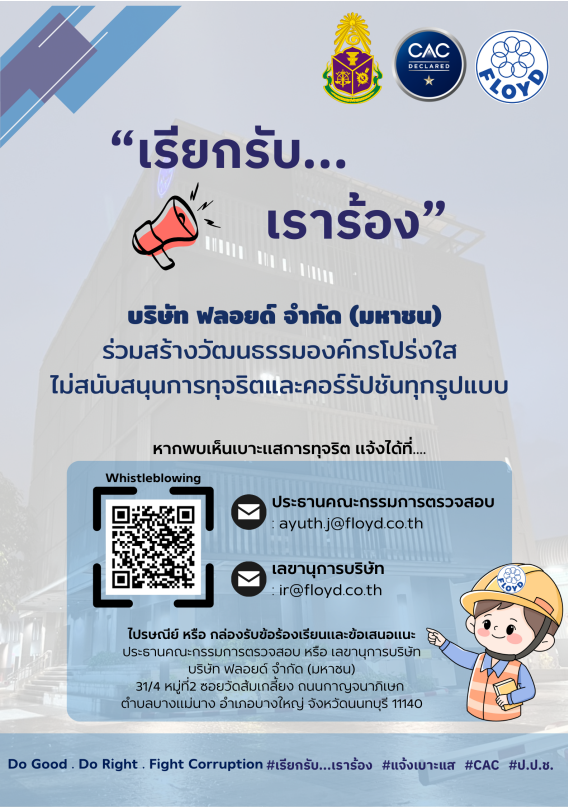
The Company has declared its intention to join the Thai Private Sector Collective Action Against Corruption (CAC), adopted the “No Gift Policy 2025,” and participated in a whistleblowing campaign under the “Call…We Report” initiative. This program, a collaboration between CAC and the National Anti-Corruption Commission (NACC), aims to encourage employees to report misconduct through secure and reliable channels.
3) Corruption Risk Assessment
The Company conducts corruption risk assessments across key business processes, such as procurement, contracting, and interactions with government agencies, to identify risk areas and implement appropriate control measures.
4) Communication and Training
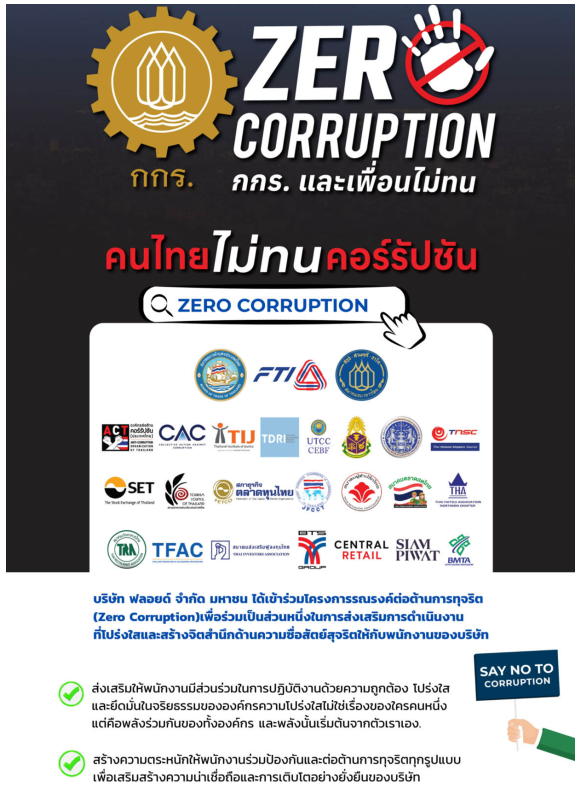
The Company continuously communicates its anti-corruption policies and practices to directors, executives, and employees. Training programs are provided for new employees as well as newly appointed directors and executives. In addition, internal campaigns such as the “ZERO CORRUPTION” initiative are conducted through various communication channels to promote awareness and engagement among employees.
5) Monitoring and Evaluation
The Company regularly monitors and evaluates compliance with its anti-corruption policies. Relevant functions are required to report on implementation, and whistleblowing channels are provided along with measures to protect whistleblowers.
6) Process Assurance
The Audit Committee and Internal Audit function are responsible for reviewing the adequacy and effectiveness of internal controls and related processes to ensure that anti-corruption measures are properly implemented.
In 2025, the Company did not identify any cases of corruption, ethical misconduct, or violations of corporate governance policies. No complaints or incidents were reported that could negatively impact the Company’s reputation. The Company believes that these efforts help foster a transparent corporate culture, strengthen stakeholder confidence, and support sustainable long-term growth.

Form of Anti-Corruption Operations
| Operation |
|---|
| Review of appropriateness in anti-corruption |
| The participation in anti-corruption projects |
| Assessment and identification of corruption risk |
| Communication and training for employees on anti-corruption policy and guidelines |
| The monitoring of the evaluation of compliance with the anti- corruption policy |
| Review of the completeness and adequacy of the process by the Audit Committee or auditor |
Number of Corruption Cases — Introduction
The Company did not identify any cases or issues related to corruption during the years 2023–2025, with a total of zero cases reported in each year. This reflects the effectiveness of the Company’s policies, control measures, and governance framework in preventing and managing corruption-related risks in an appropriate and consistent manner. The Company believes that such performance enhances transparency, credibility, and stakeholder confidence, while supporting good corporate governance and sustainable long-term business operations.
Number of Corruption Cases
| Metric | Current Year | Previous Year | Two Years Ago |
|---|---|---|---|
| Total number of cases or issues related to corruption (cases) | 0 | 0 | 0 |
Whistleblowing
Introduction
The Company has established whistleblowing and complaint channels for all stakeholders, both internal and external, through designated channels such as email and other official communication channels of the Company. A structured process has been implemented for receiving, investigating, and considering complaints under the oversight of the Audit Committee, which operates independently from management, to ensure that all matters are handled transparently, fairly, and without bias. The Company also provides appropriate protection measures for whistleblowers.
Has the Company Implemented Whistleblowing Procedures?
Yes
Operations in the Past Year
The Company has implemented its whistleblowing and complaint handling framework in a concrete and systematic manner by establishing clear policies, guidelines, and procedures. This enables employees and all stakeholder groups to report any suspected misconduct, including fraud, corruption, legal violations, unethical behavior, or breaches of corporate governance practices, in a safe, transparent, and fair environment. The Company provides multiple reporting channels, including email, mail, telephone, website, and suggestion boxes. The Company Secretary is responsible for receiving and registering complaints, conducting preliminary screening, and forwarding matters to relevant functions such as Human Resources, Accounting and Finance, or Internal Audit, depending on the nature of the case. Investigations are carried out in accordance with principles of fairness, transparency, and confidentiality. Material cases are reported to the Audit Committee, which operates independently from management.
The Company has established appropriate whistleblower protection measures to ensure that individuals who report concerns in good faith are protected from retaliation, intimidation, or any adverse consequences. Disciplinary and/or legal actions are imposed in cases of misconduct, including false or malicious reporting. In 2025, the Company did not receive any whistleblowing reports or complaints related to fraud, unethical conduct, or violations of corporate governance policies, with a total of zero cases reported. The Company believes that these mechanisms enhance transparency, credibility, and effective corporate governance, while supporting sustainable business operations in the long term.
Number of Whistleblowing Cases — Introduction
The Company did not identify any whistleblowing cases or related issues during the years 2023–2025, with a total of zero cases reported in each year. This reflects the effectiveness of the Company’s governance framework, internal controls, and preventive measures in appropriately managing related risks. The Company believes that such performance enhances transparency, credibility, and stakeholder confidence, while supporting good corporate governance and sustainable long-term business operations.
Number of Whistleblowing Cases
| Metric | Current Year | Previous Year | Two Years Ago |
|---|---|---|---|
| Total number of cases or issues received through whistleblowing channels (cases) | 0 | 0 | 0 |
Selection of Directors & Chief Executives
Selection — Introduction
During the past year, the Company did not appoint any new directors. Nevertheless, the Company has continuously reviewed the structure, size, and composition of the Board of Directors under the supervision of the Nomination, Remuneration, Corporate Governance and Sustainability Committee to ensure that the Board remains appropriately structured and aligned with the Company’s business nature, strategic direction, and growth trajectory.The Company places strong emphasis on Board diversity, taking into consideration a balanced mix of skills, experience, gender, and age, as well as maintaining an appropriate proportion of independent directors. This approach enhances the effectiveness of governance and strengthens checks and balances within the organization.
In addition, the Board has established a Board succession planning framework, with clearly defined criteria and processes for director nomination to ensure readiness for future changes. This enables the Company to appoint qualified candidates in a transparent and fair manner, in line with good corporate governance principles. Overall, the Company is of the view that the current composition of the Board remains appropriate, diverse, and capable of effectively performing its duties in setting strategic direction and overseeing the Company’s operations to achieve long-term objectives.
Selection Process — Introduction
The Company requires that the nomination and appointment of directors and top executives be conducted through the Nomination, Remuneration, Corporate Governance and Sustainability Committee (Nomination Committee), which is responsible for considering, selecting, and screening qualified candidates before proposing them to the Board of Directors and/or the shareholders’ meeting for approval in accordance with applicable laws and regulations.
In the nomination of directors, the Nomination Committee considers the structure, size, and composition of the Board, as well as the skills, knowledge, expertise, and experience required for the Company’s business (Board Skill Matrix), together with Board Diversity in terms of gender, age, and experience. This ensures that the Board maintains an appropriate balance and is capable of effectively setting strategic direction and overseeing the Company’s operations. The Company also provides shareholders with the opportunity to propose qualified candidates for consideration as directors in advance of the shareholders’ meeting.
For the selection of top executives, the Company places strong emphasis on identifying individuals with the appropriate knowledge, capabilities, experience, and expertise aligned with the Company’s strategy and business direction. Candidates must also demonstrate leadership, strategic vision, and strong managerial capabilities. Both internal and external candidates are considered to ensure the appointment of executives capable of driving the Company toward its long-term objectives.
The nomination process for top executives is closely linked to the Company’s Succession Planning and Talent Management framework. The Company continuously develops and prepares its personnel through structured development programs, such as the JUMP+ program, which focuses on enhancing leadership, strategic thinking, and management capabilities. This approach supports leadership continuity and ensures the organization is well-prepared for future growth.
CEO Succession Plan
The Company prioritizes Business Continuity Management by establishing a CEO Succession Plan policy and framework. This ensures the Company’s readiness in recruiting and developing qualified executives to assume leadership roles in the future.
Guidelines and Process
The Board of Directors, through the Nomination and Remuneration Committee, is responsible for defining the guidelines for successor recruitment and development. Candidates are evaluated based on their qualifications, knowledge, expertise, and experience, ensuring alignment with the Company’s strategic direction.
Development Plan
The Company focuses on enhancing the potential of internal executives to grow into senior leadership roles through challenging assignments, specialized training, and leadership skill development. Furthermore, a Talent Pool has been identified and cultivated to ensure readiness for seamless leadership transitions. Monitoring and Reporting
The Board of Directors regularly monitors the progress of the succession plan. Periodic reports are presented to the Board to ensure that the plan effectively addresses potential organizational changes and risks in an appropriate manner.
The Company does not impose a fixed quota of directors representing major shareholders. Instead, the Board is composed of individuals with diverse qualifications, with an appropriate proportion of independent directors to ensure effective checks and balances in governance. In the election of directors, the Company requires that the shareholders’ meeting appoint directors on an individual basis using a non-cumulative voting method. Each shareholder is entitled to vote according to the number of shares held, and candidates receiving more than half of the total votes of shareholders present and eligible to vote will be elected as directors.
The Company recognizes the importance of shareholders’ rights, particularly those of minority shareholders, by providing opportunities to propose director nominees in advance and ensuring that voting rights can be exercised in a fair, transparent, and equitable manner. Overall, the Company believes that its nomination and appointment process for directors and top executives is appropriate, transparent, and aligned with good corporate governance principles. This process strengthens governance effectiveness and supports the Company’s sustainable long-term growth.
Are Directors Selected Through the Nomination Committee?
Yes
Are Chief Executives Selected Through the Nomination Committee?
Yes
Number of Directors from Major Shareholders
4
Rights of Minority Shareholders on Director Appointment
The Company places importance on and promotes the rights of all shareholders, particularly minority shareholders, to participate in corporate governance in a fair, transparent, and equitable manner. Shareholders are encouraged to attend shareholders’ meetings and exercise their voting rights on significant matters affecting the Company’s rights and interests. The Company provides shareholders with the opportunity to propose agenda items, submit questions in advance, and nominate qualified candidates for election as directors. The relevant criteria, procedures, and information are disclosed in advance through the Stock Exchange of Thailand’s website www.set.or.th and the Company’s website www.floyd.co.th n an annual basis prior to the shareholders’ meeting.
In 2025, the Company invited shareholders to submit nominations for director candidates in advance during the period from 1 October 2024 to 31 December 2024. Upon the expiration of the specified period, no shareholder or minority investor submitted any proposed candidates, agenda items, or advance questions. In the event that any proposals or nominations are submitted, the Company Secretary will present them to the Board of Directors for consideration and subsequently inform the shareholders of the results.
The Company requires that the appointment of directors be approved by the shareholders’ meeting. Shareholders are entitled to vote in proportion to their shareholding (one share equals one vote), and the Company adopts a non-cumulative voting system. Directors are elected on an individual basis, allowing shareholders to independently assess the qualifications of each nominee. A candidate must receive more than half of the total votes of shareholders present and eligible to vote in order to be elected as a director.
The Company ensures that the director election process is conducted in a transparent, verifiable, and fair manner to safeguard the rights of all shareholders equally.
Method of Director Appointment
| Method |
|---|
| Method whereby each director requires approval votes more than half of the votes of attending shareholders with voting rights |
Selection of Independent Directors
Criteria for Selecting Independent Directors
The Company places strong emphasis on the nomination of independent directors through a structured, transparent process in line with good corporate governance principles. The nomination process is overseen by the Nomination, Remuneration, Corporate Governance and Sustainability Committee and/or the Board of Directors, as appropriate, to ensure that qualified individuals are selected, capable of performing their duties independently and effectively providing checks and balances over the Company’s management.
The Company requires that independent directors account for at least one-third of the total number of directors and not fewer than three persons. Currently, the Company has 3 independent directors out of a total of 7 directors, representing a Board Independence Ratio of 42.86%, which is in compliance with regulatory requirements. In selecting independent directors, the Company requires that candidates possess the qualifications prescribed by the Securities and Exchange Commission, the Stock Exchange of Thailand, and relevant laws. Candidates must have the knowledge, capabilities, experience, and expertise beneficial to the Company’s business, and must be able to exercise independent judgment without conflicts of interest.
Key qualifications of independent directors include, among others, holding no more than 1% of the total voting shares of the Company and its related entities; not being or having been involved in management, or serving as an employee, staff member, advisor receiving regular remuneration, or a controlling person of the Company, unless such status has ceased for the period prescribed by law; not having familial relationships with directors, executives, major shareholders, or controlling persons; and not having any business relationships or professional service engagements that may impair independent judgment.
In addition, independent directors must not be auditors or professional advisors to the Company in a manner that may create conflicts of interest, must not represent major shareholders, and must not engage in businesses that compete significantly with the Company or its subsidiaries. They must also not possess any other characteristics that may compromise their independence in performing their duties.
With respect to the nomination process, the Company considers the structure, size, and composition of the Board, as well as the required skills, expertise, and diversity necessary for the business. Candidates are sourced from both internal and external channels and undergo a rigorous screening process before being proposed to the Board of Directors and/or the shareholders’ meeting for approval in accordance with applicable laws and regulations. The Company has established a policy limiting the tenure of independent directors to no more than nine consecutive years from the date of their first appointment, unless the Board determines that continued service is appropriate and justified, taking into account good corporate governance principles. In the event of a vacancy before the end of term, the Company will appoint a qualified individual within an appropriate timeframe to ensure compliance with the required number of independent directors. Overall, the Company is of the view that its criteria and nomination process for independent directors are appropriate, transparent, and aligned with good corporate governance practices. This framework enhances effective oversight, strengthens checks and balances, and supports independent decision-making by the Board, contributing to long-term value creation for the Company.
Business or Professional Relationships — Introduction
During the past year, the Company confirms that its independent directors had no business relationships or professional service engagements with the Company, its subsidiaries, executives, major shareholders, or related parties that could give rise to conflicts of interest or exceed the thresholds prescribed by the Securities and Exchange Commission. The Board of Directors is of the opinion that all independent directors are able to perform their duties independently, exercise impartial judgment, and provide objective opinions without any constraints or undue influence that could affect the effectiveness of their roles.
Did Any Independent Director Have a Business or Professional Relationship?
No
Director Development
Development of Directors in the Past Year
The Company places importance on the continuous development of its directors to enhance their knowledge, understanding, and competencies necessary for effective corporate governance and strategic direction setting. During the past year, the Company’s directors did not attend training programs organized by the Thai Institute of Directors (IOD). However, the Company has continuously encouraged directors to develop their knowledge through alternative channels, including participation in seminars, staying updated on relevant laws, regulations, and industry trends, as well as attending Board briefings conducted by management and external experts on key issues.
In addition, the Company provides regular reporting and updates on operating performance, key risks, and business direction to ensure that directors have adequate and timely information to support their decision-making. Overall, the Company considers that such development practices continue to enhance the effectiveness of corporate governance and support the Board’s strategic decision-making.
Qualifications for Director Selection — Introduction
The Company has clearly defined criteria and qualifications for directors, taking into consideration the knowledge, capabilities, experience, and expertise relevant to the Company’s business nature and strategic direction. This ensures that the Board of Directors can effectively perform its roles in strategic direction setting and corporate governance oversight.
In the nomination process, the Company considers the Board structure, size, and composition (Board Composition), as well as the required competencies (Board Skill Matrix) and Board diversity (Board Diversity), including gender, age, experience, and specialized expertise. This approach aims to ensure an appropriate balance and to support well-rounded strategic decision-making. Individuals nominated for directorship must possess qualifications in accordance with the requirements of the Securities and Exchange Commission, the Stock Exchange of Thailand, and applicable laws. They must not possess any prohibited characteristics under the law and must be free from any conflicts of interest that may affect the independent performance of their duties.
Overall, the Company considers that such criteria and nomination process are appropriate, transparent, and aligned with good corporate governance principles, thereby enhancing governance effectiveness and supporting the Company’s sustainable long-term growth.
Qualifications for Director Selection
| Qualification | Skill & Expertise |
|---|---|
| The Company requires that directors possess qualifications in compliance with applicable laws and regulatory requirements. Directors must have the knowledge, capabilities, and experience relevant to the Company’s business operations, including expertise in building systems engineering, construction contracting, project management, finance, accounting, legal matters, and organizational management, as well as a sound understanding of the industry and related business environment. Directors are also required to uphold integrity, ethics, and honesty, and to perform their duties with responsibility, due care, and in the best interests of the Company and its shareholders as a whole. They must be able to exercise independent judgment and be free from any conflicts of interest. | 128 · Description: Construction Services · 143 · Description: Accounting · 144 · Description: Finance · 159 · Description: Engineering · 165 · Description: Risk Management |
| The Company considers the skills and expertise of its directors in alignment with the organization’s needs (Board Skill Matrix) to ensure that the Board possesses appropriate diversity and comprehensive capabilities across key areas essential for effective corporate governance and strategic execution. The key competencies considered include the following: The Company aims to maintain a well-balanced Board in terms of knowledge, capabilities, and diversity in order to support effective strategic decision-making and to enhance long-term value creation for the Company. | 141 · Description: Law · 147 · Description: Sustainability · 164 · Description: Strategic Management · 265 · Description: Governance/ Compliance · 1683 · Description: Business Administration |
Evaluation of Board & Subcommittee Performance
Criteria for Evaluating Board Performance
In 2025, the Company conducted a systematic performance evaluation of the Board of Directors. The Company Secretary distributed self-assessment forms to each director to evaluate the overall performance of the Board. The results of the evaluation were then presented to the Board of Directors for consideration and used as a basis for continuous improvement and enhancement of performance effectiveness.
The evaluation covered the Board of Directors as a whole, Board committees, and individual directors, with details as follows:
1) Board of Directors (as a whole) Evaluation
The evaluation covered four key areas:
Board structure and qualifications
Board meetings
Roles, duties, and responsibilities of the Board
Other aspects, such as the relationship between the Board and management, directors’ development, and executive development
2) Board Committees Evaluation (by committee)
The Company conducted performance evaluations of its Board committees, including the Audit Committee, Risk Management Committee, Nomination, Remuneration, Corporate Governance and Sustainability Committee, and Executive Committee. The evaluation covered four key areas:
Structure and qualifications
Meetings
Roles, duties, and responsibilities
Relationship between the Board and management
3) Individual Directors Evaluation
To ensure alignment with the Company’s direction and responsibilities, individual directors were evaluated based on the following key criteria:
Qualifications and suitability
Roles, duties, and responsibilities
Relationships among directors
Performance effectiveness
4) Managing Director Evaluation
The Company conducts an annual performance evaluation of the Managing Director. The evaluation criteria and process are established and overseen by the Independent Directors or the Nomination, Remuneration, Corporate Governance, and Sustainable Development Committee. This ensures that executive management aligns with the organization's strategic goals, maintains independence and transparency, and comprehensively covers key areas, including:
Leadership and organizational management
Strategy formulation and execution
Financial planning and performance
Relationship with the Board and external stakeholders
Human resource management and succession planning
Business knowledge and personal attributes
5) Evaluation Criteria and Rating Scale
The evaluation results are measured as a percentage of the total score in each category, with the following rating levels:
Above 90% : Excellent
Above 80% : Very Good
Above 70% : Good
Above 60% : Fair
Below 60% : Needs Improvement
A scoring scale ranging from 0 to 4 is applied to reflect the level of agreement and performance in each area in a structured manner. Overall, the Company considers that this evaluation process serves as an important mechanism to enhance Board effectiveness, strengthen good corporate governance, and support the achievement of strategic objectives and sustainable long-term growth.
Evaluation of Board Performance in the Past Year
In 2025, the Company conducted a systematic performance evaluation of the Board of Directors and its sub-committees, both at the collective and individual levels, using a self-assessment framework in accordance with the guidelines of the Stock Exchange of Thailand (SET). The objective was to review governance effectiveness, identify areas for improvement, and enhance performance on a continuous basis.
The overall evaluation results indicate that the Board of Directors and its sub-committees performed their duties at a high level of effectiveness, with key highlights as follows:
The Board of Directors achieved an “Excellent” rating both at the group level (91%) and individual level (92%), reflecting strong governance structure, oversight, and active participation of directors
The Audit Committee achieved an “Excellent” rating (96%) at both group and individual levels, demonstrating strong effectiveness in overseeing internal control and audit functions
The Risk Management Committee achieved a “Very Good” rating (86–87%), reflecting its capability in managing risks effectively and consistently
The Nomination, Remuneration, Corporate Governance and Sustainability Committee achieved an “Excellent” rating (up to 100%), highlighting its effectiveness in overseeing governance practices and organizational structure
The Executive Committee achieved ratings ranging from “Very Good” to “Excellent” (88–90%), reflecting its effectiveness in driving business operations in line with the Company’s strategic direction
The Company did not conduct cross-assessments among directors during the year. In addition, the Company conducts an annual performance evaluation of the Managing Director, which is carried out by independent directors to ensure independence and transparency. The evaluation covers leadership, strategy execution, business performance, and stakeholder engagement. In 2025, the Managing Director’s performance was rated “Excellent” at 95%. Based on the performance evaluation results, the Chief Executive Officer has successfully achieved the established targets with highly satisfactory performance, effectively driving organizational growth while consistently maintaining the Company’s profitability.
The Company considers that these evaluation results reflect the Board’s effectiveness in providing strategic direction, overseeing operations, and managing risks appropriately. This serves as a key foundation for strengthening stakeholder confidence and supporting the Company’s sustainable long-term growth.
Evaluation Results
| Evaluated Body | Group — Carried Out? | Group — Grade / Average Score | Group — Grade / Full Score | Individual (Self-Assessment) — Carried Out? | Individual (Self-Assessment) — Grade / Average Score | Individual (Self-Assessment) — Grade / Full Score | Cross (Assessing Other Directors) — Carried Out? |
|---|---|---|---|---|---|---|---|
| Board Of Director | Y | Excellent / 91% | 788/868 | Y | Excellent/ 92% | 492/532 | N |
| Audit Committee | Y | Excellent/96% | 219/228 | Y | Excellent/96% | 220/228 | N |
| Other Subcommittee | Y | Excellent/86% | 154/180 | Y | Very good/87% | 199/228 | N |
| Other Subcommittee | Y | Excellent/100% | 60/60 | Y | Excellent/96% | 46/48 | N |
| Executive Committee | Y | Very good/88% | 210/240 | Y | Excellent/90% | 260/280 | N |
Subcommittees
Subcommittees — Introduction
The Company has established subcommittees to support the Board of Directors in discharging its duties effectively across various areas. These include the Risk Management Committee, the Nomination Committee, the Remuneration Committee, the Corporate Governance and Sustainability Committee, and other subcommittees (if any). Each subcommittee has clearly defined roles, authority, and responsibilities, and has duly performed its duties as assigned.
Subcommittees
| Results of the Subcommittee's Duty Performance | Meetings — Introduction |
|---|---|
To the Shareholders of Floyd Public Company Limited The Risk Management Committee of Floyd Public Company Limited ("the Company") was appointed by the Board of Directors and consists of 3 members, all of whom are male. They are:
The Risk Committee considered appointing Ms. Benjamart Deemark, Assistant Company Secretary, to serve as the Secretary to the Risk Management Committee. The Risk Management Committee performed its duties with due diligence under its charter. In 2025, the Risk Management Committee held 1 meeting. All committee members attended the meeting, representing 100%. To define and review the organizational risk management framework to be appropriate and consistent with the company's strategic plan and various internal and external risk factors that may affect the organization's operations. This includes monitoring, evaluating, and providing recommendations on operations to the risk management team to ensure that management operates within acceptable risk levels, and has concrete and practical risk control measures to mitigate potential damages. This is to present the risk management performance report to the Audit Committee and the Board of Directors for their acknowledgment and consideration of important matters, such as:
In the name of the Risk Management Committee Floyd Public Company Limited - Mr. Boonchuo Puaprasert - Chairman of the Risk Management Committee | In 2025, the Risk Management Committee convened a total of 1 meeting to consider, oversee, and monitor the Company’s risk management to ensure it is effective and aligned with the Company’s business objectives. All members attended the meeting in full, representing a 100% attendance rate, which reflects their strong awareness and responsibility in overseeing the Company’s risk management appropriately. Details of individual attendance of the Risk Management Committee members are as follows: |
To the Shareholders of Floyd Public Company Limited The Nomination, Remuneration, Corporate Governance and Sustainable Development Committee (Nomination Committee) of the Company Floyd Public Company Limited ("the Company") was appointed by the Board of Directors, consisting of 3 directors, comprising 1 male and 2 females, as follows:
The Nomination, Remuneration, Corporate Governance, and Sustainable Development Committee Considered appointing Ms. Benjamart Deemark, Assistant Company Secretary, to serve as Company Secretary. The Nomination, Remuneration, Corporate Governance and Sustainable Development Committee The Board of Directors Nomination Committee Member Performed duties with due care under the charter of Nomination Committee Member. In 2025, the Risk Management Committee arranged a committee meeting. Nomination Committee Member 1 meeting. All committee members attended, representing 100%.
On behalf of the Nomination Committee Floyd Public Company Limited -Ms. Sukanya Pattaramalai- Chairman of the Nomination Committee | In 2025, the Nomination, Remuneration, Corporate Governance and Sustainability Committee convened a total of 1 meeting to consider and oversee key matters relating to the nomination and appointment of directors and executives, the determination of appropriate remuneration, the promotion of good corporate governance, and the advancement of the Company’s sustainability initiatives in alignment with its strategy and objectives. All members attended the meeting in full, representing a 100% attendance rate, which reflects their strong commitment and continuous responsibility in the discharge of their duties. Details of individual attendance of the Committee members are as follows: |
Meeting Attendance & Remuneration
Meeting Attendance — Introduction
In 2025, the Board of Directors held a total of 5 meetings, including the Annual General Meeting of Shareholders (AGM), to oversee, monitor, and ensure that the Company's operations aligned with the established strategies and business plans. All directors maintained a consistently high attendance rate. For the calculation of individual attendance, the Company considers the number of meetings each director was eligible to attend during their term.
Board of Directors Meetings
In 2025, the Board of Directors held a total of 4 scheduled meetings, with the meeting calendar pre-determined since Board Meeting No. 4/2024. All directors attended every meeting, representing a 100% attendance rate. This reflects the Board’s commitment, accountability, and full engagement in overseeing the Company’s comprehensive operations. The Board’s primary focus remained on balancing business growth with good corporate governance, covering the following key areas:
Financial Management: The Board consistently reviewed and approved the quarterly financial statements. The Company maintains a systematic financial reporting process, with all statements duly reviewed by the auditors from Siam Truth Audit Co., Ltd. and the Audit Committee.
Regulatory Compliance: In every quarter, the Board acknowledged reports on compliance with corporate governance principles, laws, and relevant regulations. This included monitoring stakeholder grievances, SEC/SET inquiries, summaries of news disclosed via the SET website, and reports on changes in securities holding by executives (Form 59).
Capital Management: The Board approved the allocation of net profit as a legal reserve and the dividend payment. Additionally, it considered the reduction of registered capital by cancelling unissued shares, for further submission to the Shareholders' Meeting for approval.
Director Appointments: The Board considered and nominated candidates for re-election to replace those retiring by rotation, for further approval by the Shareholders' Meeting.
Corporate Governance & Key Policies: The Board prioritizes the regular review of key policies to ensure alignment with current standards. This includes the Corporate Governance Manual, Anti-Corruption Policy, Whistleblowing Policy, Code of Conduct, and Tax Policy.
Furthermore, the Board reviewed the Charters of the Board and all sub-committees, Information Security Policy, Risk Management Policy, and the Quality, Safety, Health and Environment (QSHE) Policy, as well as preparations for PDPA and ESG standards and organizational structure reviews.
Strategic Planning & Development: The Board established the corporate goals and operational plans for 2026. This included participation in the SEC’s “Corporate Value Up” project and the SET’s “Jump+” project to enhance the value of listed companies.
Non-Executive Management Meeting (Independent Directors)
To promote good corporate governance, the Company arranged a meeting exclusively for Independent Directors without the presence of management on August 7, 2025. This provided an opportunity for Independent Directors to freely discuss and exchange views on key operational issues, focusing on applying the meeting’s conclusions to enhance overall organizational management efficiency.
Shareholders’ Meeting
The Company schedules an Annual General Meeting of Shareholders (AGM) within four months from the end of each fiscal year. Extraordinary General Meetings (EGM) may be convened on a case-by-case basis if urgent matters arise that affect shareholder interests or require approval under applicable laws and regulations. In 2025, the Board resolved to conduct the AGM via electronic media (E-AGM) through the "IR Plus AGM" application. The system was reviewed by the Electronic Transactions Development Agency (ETDA) for its clarity and reliable personal data protection measures. The meeting was held on Friday, April 25, 2025, at 1:00 p.m., with a 100% director attendance rate. The session was broadcast live from the Company’s meeting room in compliance with the Emergency Decree on Electronic Meetings, B.E. 2563 (2020) and relevant government notifications. Electronic traffic data of all attendees was recorded as evidence.
Pre-Meeting Procedures
The Company provided shareholders with ample time to access information and exercise their rights: March 24, 2025 Disclosed the invitation letter and complete supporting documents on the websites of the Stock Exchange of Thailand (SET) and the Company (www.floyd.co.th) more than 30 days prior to the meeting.
April 3, 2025: Dispatched the invitation letter and proxy forms (Form A and Form B) via registered mail to all registered shareholders at least 21 days before the meeting.
April 8-10, 2025: Published the meeting notice in newspapers for three consecutive days, at least 7 days before the meeting.
March 27 – April 22, 2025 Opened the identity verification period for shareholders via the "IR Plus AGM" application.
During the Meeting
The Board encouraged all directors and executives to attend to provide clarifications and answer questions. Attendees included the Chairman, Board members, Audit Committee, Risk Management Committee, Executive Committee, Managing Director, and the Chief Financial Officer (CFO). External participants included the auditors from Siam Truth Audit Co., Ltd., legal counsel from JTJB International Lawyers Co., Ltd., observers, and a representative from the Thai Investors Association (TIA). The Chairman conducted the meeting according to the agenda and regulations, ensuring sufficient time for shareholders to express opinions or ask questions independently and equitably. All pre-submitted and live questions were addressed comprehensively by the Board.
Post-Meeting Procedures
April 25, 2025 Disclosed the meeting resolutions and voting results for each agenda item via the SET and the Company’s website.
May 8, 2025 Published the Minutes of the 2025 E-AGM and submitted them to the SET, the Ministry of Commerce, and relevant authorities within 14 days as required by law.
During the past year, there were no Extraordinary General Meetings (EGM), no directors absent from meetings, and no changes in the Board of Directors.
Types of Remuneration of the Board of Directors
The Company has established a policy on directors’ remuneration that is appropriate, transparent, and aligned with their roles, responsibilities, and the Company’s performance. The remuneration framework also takes into account practices of listed companies within the same industry and of comparable size. Directors’ remuneration is reviewed and recommended by the Nomination, Remuneration, Corporate Governance and Sustainability Committee, before being proposed to the Board of Directors for consideration and subsequently submitted to the shareholders’ meeting for approval.
In the past year, directors’ remuneration consisted of monetary compensation, including meeting allowances and quarterly remuneration, based on their respective positions. Payments are made in accordance with the Company’s established criteria, whereby meeting allowances are paid only to directors who attend meetings, and quarterly remuneration is paid based on the highest position held to avoid duplication of payments.
In addition, the Company may grant annual bonuses to the Board of Directors within the limits approved by the shareholders’ meeting. The allocation of such bonuses is determined by the Board of Directors as deemed appropriate. For non-monetary compensation, the Company did not provide any additional benefits to directors during the year, such as health insurance, club memberships, rights to purchase shares or convertible securities (ESOP), or other similar benefits. There were also no material outstanding remuneration or benefits payable at year-end.
The Company considers that the structure of directors’ remuneration is appropriate and aligned with their duties and responsibilities, does not encourage excessive risk-taking, and supports good corporate governance, as well as long-term value creation for the Company
Remuneration of the Board — Introduction
In 2025, the Company paid remuneration to the Board of Directors in the form of monetary compensation, comprising meeting allowances and quarterly remuneration based on each director’s position. There were no non-monetary benefits provided. Such remuneration covered only the directors’ roles in the Company, with no additional compensation received from subsidiaries.
Overall, the Company did not provide any non-monetary benefits to directors, such as health insurance, club memberships, or share-based incentives (ESOP). There were also no significant outstanding remuneration or benefits payable as of year-end. The remuneration structure is considered appropriate and aligned with the roles and responsibilities of the directors, and is consistent with good corporate governance practices.
The details of remuneration for each director are as follows:
Remuneration Payable — Introduction
During the year, the Company had no outstanding remuneration or benefits payable to the Board of Directors, totaling Baht 0.00 as of the end of the accounting period. This reflects effective and transparent remuneration management in accordance with the Company’s established policies.
Remuneration or Benefits Payable to the Board
| Metric | Amount (Baht) |
|---|---|
| Remunerations or benefits pending payment to the board of directors over the past year (baht) | 0 |
Supervision of Subsidiaries & Associated Companies
Oversight Mechanism — Introduction
The Company places importance on the systematic governance of its subsidiaries and associates to ensure that their operations are efficient, transparent, and aligned with the protection of the Company’s interests as an investor. The Board of Directors has established key governance mechanisms as follows:
1) Appointment of the Company’s representatives
The Company appoints qualified individuals with appropriate knowledge, capabilities, and experience to serve as directors, executives, or authorized persons in subsidiaries and associates, at least in proportion to the Company’s shareholding. The nomination and voting for such appointments must be approved by the Board of Directors to ensure that appointed representatives can effectively oversee and safeguard the Company’s interests.
2) Roles, duties, and responsibilities
The Company clearly defines the scope of authority, duties, and responsibilities of its representatives in subsidiaries and associates. These individuals are responsible for overseeing operations and participating in the formulation of key policies, strategies, and business decisions to ensure alignment with the Company’s strategic direction. They are also required to report operating results and significant matters to the Company on a regular basis.
3) Oversight of disclosure and significant transactions
The Company requires subsidiaries and associates to ensure complete, accurate, and timely disclosure of financial position and operating results. Transactions such as connected transactions, acquisitions or disposals of assets, and other significant transactions must comply with the same principles and regulatory requirements applicable to the Company. This ensures proper consolidation of financial information within the prescribed timeframe.
4) Internal control and other governance mechanisms
The Company requires its subsidiaries, particularly those engaged in core businesses, to maintain adequate and effective internal control and risk management systems. Oversight is exercised through the Company’s representatives, and significant matters—such as capital increases or reductions, dissolution, or material transactions—must be subject to approval by the Board of Directors or conducted in accordance with established authority limits.
The Company believes that these governance mechanisms enhance transparency, operational efficiency, and risk management across subsidiaries and associates, thereby safeguarding the Company’s investments and supporting long-term value creation.
Does the Company Have Subsidiaries or Associated Companies?
Yes
Is There a Mechanism for Overseeing Subsidiaries and Associated Companies?
Yes
Mechanism for Overseeing Management of Subsidiaries
The Company has one subsidiary, BE Energy Co., Ltd., in which the Company holds 100% of the shares. The Company has established a systematic governance framework for overseeing the management and operational accountability of its subsidiary, as approved by the Board of Directors, to ensure efficient, transparent operations and to safeguard the Company’s interests as an investor. The Company appoints qualified individuals with appropriate knowledge, expertise, and experience to serve as directors and executives in the subsidiary. The nomination and exercise of voting rights for such appointments require prior approval from the Board of Directors. The appointed representatives are required to act in the best interests of the subsidiary, and any voting on significant matters must obtain prior approval from the Board of Directors.
The Company has clearly defined the scope of authority, roles, and responsibilities of its representatives. These individuals are responsible for overseeing operations and participating in the formulation of key policies, strategies, and significant business decisions of the subsidiary to ensure alignment with the Company’s strategic direction. They are also required to regularly report operating results and significant matters to the Company.
In terms of information governance, the Company requires the subsidiary to prepare and disclose financial position and operating results in a complete, accurate, and timely manner. Connected transactions, acquisitions or disposals of assets, and other significant transactions must comply with the same criteria applied by the Company, as well as relevant laws and regulations. The subsidiary also uses the same external auditor, Siam Truth Audit Co., Ltd., to ensure consistency in financial reporting standards. Furthermore, the Company requires the subsidiary, particularly those engaged in core business operations, to maintain adequate and effective internal control and risk management systems. Proper data management and accounting records must be maintained to enable the Company to review and consolidate financial statements accurately and on a timely basis.
Overall, the Company believes that these governance mechanisms enhance transparency, operational efficiency, and risk management within the subsidiary, thereby safeguarding the Company’s investments and supporting long-term value creation.
Oversight Mechanisms
| Mechanism |
|---|
| Sending representatives to act as directors, executives or controlling persons in proportion to shareholdings |
| Defining the scope of powers, duties and responsibilities of directors and executives who represent the company in setting important policies |
| Disclosure of financial information and operating results |
| Transactions between the Company and related persons |
| Other important transactions |
| Acquisition or disposal of assets |
| Internal control system of the subsidiary operating the core business is appropriate and sufficient in the subsidiary operating the core business |
Agreements Between the Company and Shareholders in Managing Subsidiaries
The Company has not entered into any shareholders’ agreement with other shareholders regarding the management of its subsidiaries or associates that would materially affect control, management authority, or the allocation of returns beyond the proportion of shareholding. The management and control of subsidiaries are conducted in accordance with the Company’s shareholding proportion, as well as the governance framework, authority structure, and procedures established by the Company, in compliance with applicable laws and regulations.
Board Duty Performance — Overview
Board Duty Performance — Overall Description
During the past year, the Board of Directors has effectively performed its duties, playing a key role in setting the Company’s strategic direction, policies, and overseeing operations to achieve sustainable business objectives. The Board has focused on long-term value creation while enhancing organizational resilience to navigate the rapidly changing economic, technological, and competitive landscape.
The Board has jointly established the Company’s vision, strategies, and business plans in alignment with industry trends and future growth opportunities. Emphasis has been placed on strengthening competitive advantage through business expansion, particularly in engineering systems and Data Center projects, which are the Company’s core businesses. In addition, the Board has driven operational excellence, efficient cost management, and the adoption of digital transformation to enhance project management, cost control, and overall organizational efficiency.
Corporate Governance
The Board places strong importance on conducting business in accordance with good corporate governance principles, upholding transparency, accountability, business ethics, and strict compliance with applicable laws and regulations. This approach aims to build confidence among shareholders, investors, and all stakeholders. The Board also promotes an organizational culture grounded in integrity, responsibility, and long-term consideration of social and environmental impacts. Furthermore, the Board plays a critical role in overseeing the adequacy and effectiveness of the internal control system, enterprise risk management framework, and internal audit function. This includes establishing a comprehensive risk management framework, regularly monitoring and assessing key risks, and implementing proactive risk management measures to address uncertainties and mitigate potential business impacts.
Operational Oversight
The Board convenes regularly to ensure effective governance. In 2025, the Board held a total of four meetings in accordance with the schedule pre-determined by the Board of Directors' Meeting No. 4/2024 with full attendance by all directors (100%), reflecting strong commitment and active participation in overseeing the Company’s operations. In addition, the Company arranged Non-Executive Sessions once on August 7, 2025 allowing independent directors to freely express their views and provide strategic recommendations without the presence of management. This practice enhances independent oversight and strengthens checks and balances within the governance structure. The Company Secretary unit has compiled and forwarded the recommendations to the Management for further action
Shareholder Engagement
The Board ensures that shareholder meetings are conducted in accordance with good governance practices. In 2025, the Company held its Annual General Meeting of Shareholders on 25 April 2025 via electronic means (E-AGM), enabling shareholders to participate and exercise their rights conveniently, transparently, and efficiently. Shareholders are also provided opportunities to propose agenda items and submit questions in advance. The Company has enhanced its security standards for distributing important documents to shareholders by implementing the TSD QR Sealer system from the Thailand Securities Depository Co., Ltd. This system ensures the integrity of personal data during transit and prevents unauthorized access to sensitive information
The Board also prioritizes long-term organizational development by focusing on talent development, succession planning, leadership pipeline building, and upskilling employees to align with the increasing complexity of the business. It also fosters a corporate culture that supports continuous learning, adaptability, and innovation. Overall, the Board is of the view that the Company has operated in alignment with its strategic direction, maintains a strong governance framework, and effectively manages risks. These factors form a solid foundation for building stakeholder confidence, supporting sustainable growth, and delivering long-term value to the Company.
Audit Committee Duty Performance
Audit Committee Duty Performance — Introduction
In 2025, the Audit Committee fully discharged its duties and responsibilities as assigned by the Board of Directors, with a focus on ensuring that the Company’s operations are conducted in a transparent, accurate, and accountable manner, in compliance with good corporate governance principles as well as applicable laws and regulations. In this regard, the Audit Committee also plays a critical role as a check-and-balance mechanism and as a representative in safeguarding the interests of shareholders, particularly minority shareholders, to ensure that business operations are conducted fairly, transparently, and are subject to proper oversight.
The Audit Committee held regular meetings to review and oversee key matters. The summary of its performance during the year is as follows:
1) Review of Financial Statements
The Audit Committee reviewed the quarterly and annual financial statements in conjunction with management and the external auditor, with emphasis on accuracy, completeness, and transparency of financial information, as well as adequate disclosure to ensure that shareholders and investors are able to make informed decisions.
2) Oversight of Internal Control and Internal Audit
The Audit Committee assessed the adequacy and effectiveness of the Company’s internal control systems, approved the internal audit plan, and closely monitored audit findings. Particular attention was given to mitigating risks related to fraud, errors, and abuse of authority, thereby ensuring appropriate checks and balances over management’s operations.
3) Risk Management
The Audit Committee monitored and evaluated the Company’s key risks, including governance risks and compliance risks, to ensure that appropriate mitigation measures are in place and that such risks do not adversely impact shareholders and stakeholders.
4) Compliance with Laws and Regulations
The Audit Committee oversaw compliance with applicable laws, regulations, and regulatory requirements, including the review of related party transactions, ensuring that such transactions are reasonable, transparent, and conducted in the best interests of the Company and its shareholders.
5) Oversight of External Auditor
The Audit Committee considered the appointment, nomination, and remuneration of the external auditor, as well as assessed the auditor’s independence and performance. The Committee also held private sessions with the external auditor without the presence of management to ensure independent discussions and the ability to raise significant observations freely. In addition, the Audit Committee regularly met with management, the internal audit function, and the external auditor to acknowledge operational results, discuss issues and challenges, and consider recommendations to enhance operational efficiency.
In conclusion, the Audit Committee is of the opinion that the Company has adequate and appropriate internal control systems, effective risk management practices, and that its financial reporting is accurate, reliable, and in compliance with applicable standards. The Audit Committee has performed its duties independently, transparently, and effectively in overseeing, reviewing, and providing checks and balances over management, in order to safeguard the interests of all shareholders and stakeholders. These practices form a key foundation for building confidence and supporting the Company’s sustainable long-term growth.
Results of the Audit Committee's Duty Performance in the Past Year
Report on the Performance of the Audit Committee for the Year 2025
To the Shareholders of FLOYD Public Company Limited
The Audit Committee of FLOYD Public Company Limited (the "Company") is appointed by the Board of Directors and consists of 3 independent directors, 2 males and 1 female.
1. M.L. Ayuth Jayant, Chairman of the Audit Committee (Independent Director)
2. Mr. Boonchu Phuaprasert, Audit Committee (Independent Director)
3. Ms. Sukanya Pattaramalai, Audit Committee (Independent Director)
The Audit Committee has considered the appointment of Ms. Kedsarin Srijansa-ard. The position of Assistant Managing Director of Accounting and Finance (CFO) to act as the Secretary of the Audit Committee.
The 3 Audit Committee members are qualified members of the Securities and Exchange Commission (SEC) and the Stock Exchange of Thailand (SET) and those who have skills, knowledge, and expertise. It is suitable for businesses in accounting, finance, marketing, management, risk management, internal control, legal and information technology systems. The 3 Audit Committee members are not any executives, employees or advisors of the Company.
The Audit Committee has performed its duties in accordance with the scope of duties and responsibilities assigned by the Board of Directors and as specified in the Charter of the Audit Committee of the Company review the Company's operations to ensure that they comply with the principles of good corporate governance. It has an effective internal control system. The Company complies with relevant regulations and laws, as well as takes care of cases where there may be a conflict of interest between the Company and related parties.
In 2025, the Audit Committee held 4 meetings. All directors attended all four meetings, representing a 100% attendance rate of the total meetings held. The Audit Committee has acted prudently, prudently, transparently, and independently within the scope of its responsibilities, as well as the report of the meeting and/or recommendations to the Board of Directors, which summarizes the material issues in the performance of its duties as follows.
Review of Financial Reports
The Audit Committee has reviewed the Company's quarterly and annual financial statements. The Company has invited the relevant management and auditors to attend the meeting on the agenda of considering the financial statements. To clarify and answer the questions of the Audit Committee on the accuracy, completeness adjustment of important accounting entries that affect the financial statements. The adequacy of the information disclosed in the financial statements and the auditor's observations have been considered and reviewed, and the Audit Committee is of the opinion that the financial statements are accurate and in accordance with generally accepted accounting standards, as well as the process of preparing and disclosing the information in the financial statements is accurate and complete. Reliable, sufficient and timely, without material amendments from the auditor once it has been reviewed or audited.
In addition, The Audit Committee has arranged a special meeting with the auditor without the attendance of the executives in the meeting 1 time held on August 7, 2025. The meeting was held to discuss material information and the internal control system related to the preparation of accounting and financial reports, as well as other matters, as well as obstacles during operations. It was observed that the auditors encountered no issues during their work and received excellent cooperation from the management. They have independence in their work, as well as knowledge, experience, and adequate review guidelines suitable for performing their duties as auditors. The Corporate Secretary's Office coordinated to convey the recommendations from this meeting to management for further consideration and action on relevant matters.
Review of the Company's disclosure in the event of a connected transaction or a transaction that may have a conflict of interest.
The Audit Committee has considered and reviewed connected transactions or transactions that may have a conflict of interest of the Company in accordance with the rules of the Stock Exchange of Thailand and the rules of the Securities and Exchange Commission (SEC). The Company shall also take into account the necessity, reasonableness, transparency and non-transfer of benefits, including the disclosure of information and other requirements as received from the Company before presenting to the Board of Directors for consideration and approval of the transaction.
Selection, Proposal, Appointment and Proposal of Auditor's Remuneration
The Audit Committee has considered the selection of auditors based on their performance, independence, qualifications, skills, knowledge, audit experience and the appropriateness of remuneration. The Audit Committee considers that should propose to the Board of Directors for approval at the Annual General Meeting of Shareholders to consider the appointment of the Company's existing auditor Siam Truth Auditing Company Limited is the auditor of the Company and its subsidiary for the year 2025 as follows: Mr. Banjong Pitchayaprasat CPA Registration no. 7147 or Miss Khaymanundt Chaichuen CPA Registration No. 8260 or Mr. Chaiwat Saetiaw CPA registration No. 11042 or Miss Orawan Suwanhiranchot CPA registration No. 11145 or another auditor within the same office is the signatory of the audit and review report of the Company and its subsidiary, which sets the audit fee for the year 2025 in the amount of THB 1,500,000 per year, excluding other expenses such as allowances and travel expenses, which is decrease from the previous year to the amount of THB 200,000. It was found to be at an appropriate rate.
In 2025, the Audit Committee held a meeting with the auditor specifically without the participation of the management on August 7, 2025 to discuss the scope. Guidelines and audit plans for the independence of the auditor in the performance of duties and the expression of opinions by focusing on the presentation of accurate, complete and sufficient information.
Review of the internal control system
The Audit Committee has considered and reviewed the establishment of an appropriate internal control system, internal audit system, and anti-corruption management and control in collaboration with the Internal Auditor on a regular basis. The assessment of the adequacy of the Company's internal control system, which is prepared in accordance with the guidelines of the Securities and Exchange Commission, is used in conjunction with the annual internal audit plan.
The Audit Committee approved the hiring of Siam Whiz Audit & Advisory, an external internal audit service company, is the company's internal auditor. The Audit Committee shall report directly to the Audit Committee as specified in the Internal Auditor's Charter, as well as supervise the audit to international standards, as well as ensure that the work is carried out in accordance with the approved work plan. The results of the 2024 internal audit did not find any indication of fraudulent acts or significant internal control deficiencies.
The Audit Committee reviewed the Charter of the Audit Committee and Charter of the Internal Audit at least once a year, and in 2025, the Audit Committee reviewed the Charter on August 7, 2025
Review of risk assessment system, risk management
The Company's risk management is in accordance with the guidelines set by the Office of the Securities and Exchange Commission and the Stock Exchange of Thailand. This includes internal controls, risk management, operational control information and communication systems, including adequate and appropriate monitoring systems. The Audit Committee has reviewed the effectiveness of risk management from the Company's performance report and performed its duties with prudence, independence and honest opinion without restrictions on obtaining information and prioritizing good corporate governance in accordance with the principles of the Stock Exchange of Thailand. The Chairman of the Risk Management Committee attended a meeting with the Audit Committee to report on the progress of risk management in accordance with the policies and work plans. The Audit Committee is of the opinion that the Company has an effective risk management system that can be trusted that the Company has managed risks to an acceptable and appropriate level.
Review of Corporate Governance Principles and Compliance with Business-Related Laws
The Audit Committee has reviewed the Good Corporate Governance and Compliance Manual related to the Company so that the Company Comply with the law Rules, Regulations and Rules Related to Business Operations. In 2025, the Audit Committee reviewed and monitored the Company's operations using sufficient independent knowledge and abilities in accordance with the duties and responsibilities specified in the Audit Committee's Charter. The Company is of the opinion that the financial Statements show material and reliable information in accordance with generally accepted accounting standards. There is an appropriate internal control system and risk management, as well as compliance with the law. The Company's rules and regulations related to its business operations are complete, and no transactions were found in the Company's Acts that are contrary to relevant laws and regulations.
On behalf of the Audit Committee
FLOYD Public Company Limited
- - M.L. Ayuth Jayant -
Chairman of the Board of Directors
Chairman of the Audit Committee and Independent Director
Executive Committee Duty Performance
Results of the Executive Committee's Duty Performance in the Past Year
To the Shareholders of Floyd Public Company Limited
The Executive Committee of Floyd Public Company Limited ("the Company") was appointed by the Board of Directors and consists of 4 executive directors, comprising 3 males and 1 female, as follows:
Mr. Thosaporn Jittawera, Chairman of the Executive Committee, attended 14 out of 14 meetings, representing 100%.
Mr. Apirak Muangkasem, Executive Director, attended 14 out of 14 meetings, representing 100%.
Mr. Prasit Thasanasugarn, Executive Director, attended 14 out of 14 meetings, representing 100%.
Ms. Lakshmi Lertsupakul, Executive Director, attended 14 out of 14 meetings, representing 100%.
In 2025, the Executive Committee held 14 meetings. All committee members attended 100% of the meetings. In considering and reviewing various matters, the Executive Committee acted with prudence, caution, transparency, and independence within the scope of its responsibilities under the Executive Committee Charter, as well as reporting meeting results and/or recommendations to the Board of Directors. The key issues in performing its duties are summarized as follows:
Prepare, review, and propose the company's business policies, goals, operational plans, business strategies, resource allocation framework, development, and annual budget, as well as various operational guidelines and management authorities for approval by the Board of Directors.
Control, supervise, and oversee the company's business operations to comply with business policies, goals, operational plans, business strategies, and budgets approved by the Board of Directors, both short-term and long-term, including issuing organizational policies, regulations, and guidelines to ensure efficient and transparent operations.
Consider and approve expenditures for various investments or operations, borrowing or requesting any loans from financial institutions, lending money, as well as acting as a guarantor for the company's normal transactions, and for the benefit of operating in accordance with the company's objectives within the specified limits. Such actions must comply with the announcements of the Stock Exchange of Thailand, the Securities and Exchange Commission, the Capital Market Supervisory Board, or any other relevant laws.
Define the organizational structure, development plans, and management authority, covering details of selection, hiring, transfer, training, and termination of the company's employees who are executives or senior management. The Managing Director of the company is authorized to sign employment contracts on behalf of the company.
Supervise and approve matters related to the company's operations, and may appoint or assign one or more persons to act on behalf of the Executive Committee as deemed appropriate, and the Executive Committee may revoke, change, or amend such powers.
Appoint consultants in various fields important to the company's operations to provide strategic advice or to comply with relevant legal requirements, ensuring that project outcomes align with the company's goals and business direction. In 2025, the company participated in the Listed Company Value Enhancement Project (Jump+), appointing project consultants to provide advice and support operations under the project in accordance with regulations, rules, and transparency standards such as CAC guidelines or ESG.
Promote and provide the company's Compliance Manual regarding the code of conduct and business ethics for executives and employees to serve as internal guidelines, as well as to establish organizational values to be practiced as part of the organizational culture.
Arrange for an annual review of the Executive Committee Charter and submit it to the Board of Directors for acknowledgment and/or approval.
Report the performance of the Executive Committee to the Board of Directors for consideration or acknowledgment at least once per quarter.
Perform any other duties as assigned by the Board of Directors.
On behalf of the Executive Committee
Floyd Public Company Limited
- Mr. Thosaporn Jittawera -
Chairman of the Executive Committee