

Sustainability · 2025
In this section58 topics
- Sustainability Policy2 items
- Sustainability Goals & UN SDGs3 items
- Policy Review3 items
- Business Value Chain1 item
- Stakeholder Analysis2 items
- Environmental Sustainability — Overview1 item
- Environmental Policy & Guidelines4 items
- Environmental Policy Review3 items
- Energy — Plan & Guidelines2 items
- Energy — Electricity Consumption2 items
- Energy — Fuel Consumption2 items
- Energy — Targets2 items
- Energy — Performance & Outcomes2 items
- Water Management — Overview1 item
- Water — Plan & Guidelines3 items
- Water — Withdrawal, Discharge & Consumption4 items
- Water — Targets3 items
- Water — Performance & Outcomes2 items
- Waste Management — Overview1 item
- Waste — Plan & Guidelines2 items
- Waste — Generation, Disposal & Recycling3 items
- Waste — Targets3 items
- Waste — Performance & Outcomes2 items
- Greenhouse Gas — Overview1 item
- GHG — Plan & Guidelines2 items
- GHG — Emissions1 item
- GHG — Emissions Verification1 item
- GHG — Principles & Standards2 items
- GHG — Targets2 items
- GHG Targets — Other Targets2 items
- GHG — Performance & Outcomes2 items
- Environmental Legal Incidents2 items
- Social Sustainability — Overview2 items
- Social Policy & Guidelines5 items
- Social Policy Review3 items
- Social — Principles & Standards Practised2 items
- Human Rights Due Diligence2 items
- Employee Management — Overview1 item
- Employees — Plan & Guidelines3 items
- Employees — Workforce4 items
- Employees — Remuneration & Provident Fund2 items
- Employees — Training & Development2 items
- Employees — Occupational Health & Safety2 items
- Employees — Labour Relations2 items
- Employees — Employee Representation3 items
- Employees — Targets3 items
- Employees — Performance & Outcomes2 items
- Customer Management — Overview1 item
- Customers — Plan & Guidelines3 items
- Customers — Satisfaction Results2 items
- Customers — Targets3 items
- Customers — Performance & Outcomes2 items
- Community & Social — Overview1 item
- Community & Social — Plan & Guidelines3 items
- Community & Social — Targets3 items
- Community & Social — Performance & Outcomes2 items
- Other Social Management1 item
- Law Violation Incidents2 items
Sustainability Policy
Has a Sustainability Policy
Yes
Policy Description
Floyd Public Company Limited conducts its business with a strong commitment to good corporate governance and integrates sustainability principles into its business direction and strategy to achieve stable growth, alongside creating long-term value for all stakeholders. The Company places importance on the systematic management of Environmental, Social and Governance (ESG) aspects, covering policy formulation, risk management, operations, as well as monitoring and evaluation, to ensure that its business operations comply with international standards and meet stakeholder expectations.
Environmental Dimension The Company is committed to minimizing the environmental impacts of its operations by emphasizing efficient use of resources and energy, waste reduction, and reduction of greenhouse gas emissions. It also promotes environmentally friendly practices, as well as preparedness and adaptation to climate change. Social Dimension The Company prioritizes occupational health and safety, workplace environment, and respect for human rights, along with fair treatment of employees and fostering positive relationships with communities. It also encourages participation from employees and stakeholders in social contribution activities. Governance Dimension The Company operates with transparency, integrity, and accountability, supported by clear policies and measures to prevent corruption, strengthen risk management, and ensure effective internal control, thereby building confidence among shareholders, investors, and stakeholders.
The Company actively promotes awareness and participation among employees at all levels in driving sustainability policies on an ongoing basis, embedding ESG practices into the corporate culture and supporting long-term sustainable growth. The Company firmly believes that conducting business under good corporate governance, together with sustainable development, forms a key foundation for long-term stability and growth.
In 2025, the Board of Directors, through the Nomination, Remuneration, Corporate Governance and Sustainability Development Committee, reviewed the Sustainability Policy by considering economic, social, and environmental dimensions relevant to the Company’s core business in a comprehensive manner. The Company is committed to maximizing stakeholder satisfaction while advancing sustainable development to enhance quality of life and reduce environmental impacts, in alignment with both national and global Sustainable Development Goals (SDGs).
The Company has integrated economic, social, and environmental dimensions into its strategies and operations in accordance with international practices. It continuously communicates and promotes understanding among employees at all levels to ensure effective implementation and embed sustainability into the corporate culture. In addition, the Company reviews its business direction, plans, and operational processes annually to align its strategies with long-term objectives.
In 2025, the Company was awarded a certificate under the “ESG DNA” program by the Stock Exchange of Thailand, a sustainability training program for personnel at all levels. This reflects the Company’s commitment to enhancing ESG knowledge across environmental, social, and governance dimensions. More than 78% of employees have completed the basic sustainability training program, strengthening awareness and capabilities in driving ESG practices across the organization.
The Company has established its sustainability policies and targets as follows:
Sustainability Goals & UN SDGs
Has Sustainability Goals
Yes
Goals Description
Sustainability Management Targets
Floyd Public Company Limited has established its sustainability management targets by integrating them into the Company’s business direction and strategy to drive “Quality Growth,” alongside effective risk management and long-term value creation for stakeholders. The Company views ESG not merely as an operational framework, but as a strategic driver that enhances competitiveness, profitability, and long-term business sustainability. These targets encompass economic, social, governance, and environmental dimensions and are aligned with the United Nations Sustainable Development Goals (SDGs).
1) Economic: Quality and Sustainable Growth
The Company aims to achieve continuous growth in revenue and profitability through effective cost and risk management, with a focus on selecting high-quality projects that generate appropriate returns. A key strategic priority is the delivery of projects that meet quality standards, are completed on schedule, and effectively respond to customer needs. This builds trust and supports repeat business, which serves as a foundation for long-term revenue growth. In parallel, the Company has implemented a structured Enterprise Risk Management (ERM) framework to manage business volatility and mitigate potential impacts on operational performance and cash flow.
In the long term, the Company seeks to enhance its competitive advantage through the adoption of technology and innovation, as well as the development of integrated services to create added value, optimize costs, and differentiate itself in the market.
Key Indicators: Revenue and profit growth / Customer satisfaction / On-time project delivery / Actual risk occurrence levels
2) Social: People Development and Sustainable Organization
The Company recognizes people as a key driver of success and is committed to providing a safe, fair, and supportive working environment that enables employee growth. The Company aims to continuously reduce workplace accidents, with a long-term goal of achieving zero accidents, by strengthening occupational health and safety standards and fostering a strong safety culture across the organization. In terms of human capital management, the Company operates under principles of human rights and equality, while continuously developing employee capabilities to support business growth and technological changes. At the same time, the Company strives to build strong relationships with communities and stakeholders by conducting business responsibly, encouraging stakeholder engagement, and managing complaints in a transparent and fair manner.
Key Indicators: Accident rate / Average training hours per employee / Community complaint management
3) Governance: Transparency, Accountability, and Trust
The Company is committed to enhancing its corporate governance practices in alignment with the regulations of the Securities and Exchange Commission (SEC) and international best practices, with a strong emphasis on transparency, ethics, and accountability. The Company fosters a culture of integrity by enforcing a strict code of conduct and implementing comprehensive anti-corruption measures across all levels of the organization. The Company also strengthens its risk management and internal control systems, ensuring they are integrated into strategic decision-making processes to enable timely identification and mitigation of risks.
In addition, the Company emphasizes accurate, complete, and timely disclosure of information to build confidence among investors and stakeholders.
Key Indicators: Number of corruption or misconduct cases / CG Rating / Ethics and anti-corruption training participation / Level of disclosure transparency
4) Environmental: Impact Reduction and Long-term Efficiency
The Company is committed to minimizing environmental impacts from its operations by promoting efficient use of resources and energy, which contributes to both cost reduction and long-term sustainability. The Company aims to reduce waste generation and greenhouse gas emissions through process improvements and the implementation of the 3Rs principle (Reduce, Reuse, Recycle) across all operational levels.
Furthermore, the Company promotes responsible resource utilization and continuously improves environmentally friendly processes, while preparing for risks related to climate change.
Key Indicators: Waste reduction and recycling rate / Greenhouse gas emissions / Environmental complaints
UN Sustainable Development Goals
| SDG Goal |
|---|
| Goal 3 Good Health and Well-being |
| Goal 4 Quality Education |
| Goal 5 Gender Equality |
| Goal 6 Clean Water and Sanitation |
| Goal 7 Affordable and Clean Energy |
| Goal 8 Decent Work and Economic Growth |
| Goal 9 Industry, Innovation and Infrastructure |
| Goal 10 Reduce Inequalities |
| Goal 11 Sustainable Cities and Communities |
| Goal 12 Responsible Consumption and Production |
| Goal 13 Climate Action |
| Goal 16 Peace, Justice and Strong Institutions |
| Goal 17 Partnerships for the Goals |
Policy Review
Policy Reviewed This Year
Yes
Policy Changed This Year
Yes
Review Details
In the past year, Floyd Public Company Limited has placed strong emphasis on strengthening the foundation of its sustainability management in a more systematic manner to support long-term development. Key initiatives are summarized as follows:
The Company has initiated the planning and development of data collection systems to support the calculation of its Carbon Footprint for Organization (CFO). This marks a significant step toward enhancing environmental management and preparing for the establishment of future greenhouse gas reduction targets.
In terms of corporate governance, the Company is in the process of preparing for certification under the Thai Private Sector Collective Action Against Corruption (CAC). This includes the review and enhancement of policies, operational procedures, and internal control measures to ensure alignment with relevant standards and requirements, thereby strengthening transparency and building stakeholder confidence.
In addition, the Company has prioritized the enhancement of occupational health and safety standards across all business units. Improvements have been made in safety management processes, operational risk assessments, and the promotion of a strong safety culture, with the aim of reducing workplace accidents and ensuring a safe working environment for all employees.
Business Value Chain
Value Chain Description
Value Chain
Floyd Public Company Limited provides integrated Mechanical, Electrical, and Plumbing (M&E) engineering services, covering the entire project lifecycle from planning and design, procurement, installation, testing, to system maintenance. The Company manages its value chain in an integrated manner, connecting key stakeholders across all stages from upstream to downstream.
The Company’s value chain is not limited to contract execution but focuses on creating added value through work quality, technical expertise, cost and time management, as well as systematic risk management. This enables the Company to effectively meet customer requirements and sustain long-term competitive advantage.
Primary Activities
(1) Inbound Logistics
The Company manages key inputs through a structured approach, including material planning, supplier selection and evaluation, and supply chain management, to ensure that materials and equipment meet required standards and are delivered in line with project timelines.
The Company also places strong emphasis on subcontractor management by establishing clear selection criteria covering quality, safety, and operational capability, along with continuous performance monitoring to control risks related to cost, quality, and delays. Long-term relationships with suppliers are fostered based on transparency, fairness, and business ethics, contributing to the stability of the supply chain.
(2) Operations
The Company delivers M&E installation works in accordance with international engineering standards, supported by comprehensive project management systems covering planning, cost control, scheduling, and on-site risk management. Quality Control (QC) and Quality Assurance (QA) are implemented at every stage to ensure compliance with design specifications, engineering standards, and client requirements. In parallel, safety management practices are continuously enhanced to reduce workplace accidents and ensure a safe working environment.
In recent years, the Company has increasingly adopted digital technologies and project management tools—such as progress tracking systems, data analytics, and resource planning—to improve efficiency, reduce errors, and enhance operational accuracy.
(3) Outbound Logistics
The Company ensures systematic project delivery, including Testing & Commissioning, system readiness verification, and joint inspections with clients. Comprehensive documentation is provided, such as As-built Drawings, Operation and Maintenance (O&M) Manuals, and testing reports, enabling clients to operate and manage systems effectively over the long term. High-quality and complete project delivery is critical in building customer trust and minimizing potential disputes.
(4) Marketing and Sales
The Company adopts a track record-driven marketing strategy, leveraging proven performance and long-term client relationships to build credibility. Project acquisition is primarily through competitive bidding, where the Company demonstrates its capabilities in TOR analysis, cost estimation, and technical proposal development to enhance success rates. Client relationship management is also a key focus, enabling the Company to maintain a strong base of repeat clients, which provides more stable and lower-risk revenue streams compared to new client acquisition.
(5) Customer Services
The Company provides after-delivery services to ensure value continuity, including preventive and corrective maintenance, technical consultation, and responsive issue resolution. Effective after-sales services enhance customer satisfaction, reduce operational risks for clients, and create opportunities for future business, such as maintenance contracts, retrofit works, and new projects.
Support Activities
Procurement
The Company maintains transparent and auditable procurement processes, with a strong focus on cost efficiency. It also actively develops suppliers to meet standards in quality, safety, and ESG.
Technology Development
The Company applies technology in design, planning, and project management, including digital systems, data management, and analytical tools, to enhance productivity and reduce costs.
Human Resource Management
The Company is committed to continuous workforce development in engineering skills, project management, and leadership. It also promotes a corporate culture centered on safety, quality, and ethics.
Infrastructure
The Company supports its operations through efficient organizational systems, including accounting, finance, internal controls, risk management, and good corporate governance practices.
Value Creation and Stakeholder Relationships
The Company is committed to creating balanced value for all stakeholder groups throughout the value chain, while continuously managing relationships alongside potential risks and impacts arising from business operations, to build long-term trust and sustainability.
Customers
The Company delivers high-quality projects in accordance with engineering standards and within agreed timelines, with a strong emphasis on accuracy, safety, and long-term operational efficiency. In addition, ongoing technical support and maintenance services are provided to optimize system performance. Customer feedback is actively gathered and used to continuously improve operations.Suppliers and Subcontractors
The Company conducts business based on transparency, fairness, and strong business ethics. Clear criteria are established for the selection and evaluation of suppliers and subcontractors, covering quality, safety standards, and operational capability. The Company also supports capability development among partners to enhance overall performance. Effective contract management and appropriate payment practices are implemented to reduce supply chain risks and foster long-term business relationships.Employees
The Company continuously develops employee capabilities through training, knowledge transfer, and skill enhancement aligned with business needs. It supports career advancement and leadership development at all levels. A safe and fair working environment is prioritized, with a strong emphasis on safety, quality, and ethical culture, as well as employee welfare and well-being, to enhance engagement and retention.Shareholders and Investors
The Company aims to deliver sustainable and appropriate returns through efficient management and financial discipline. It emphasizes risk management, cost control, and careful project selection, while adhering to good corporate governance principles. Transparent, accurate, and timely disclosure is maintained to strengthen investor confidence and trust.Communities and Society
The Company conducts its operations with consideration for environmental and community impacts. Project-level impact assessments are carried out, with appropriate mitigation measures such as controlling noise, dust, and waste. The Company strictly complies with relevant laws and regulations, maintains open channels for feedback and complaints, and ensures prompt and fair responses to build long-term trust and positive relationships with communities.
Stakeholder Analysis
Introduction
Floyd Public Company Limited places strong emphasis on managing relationships with all stakeholder groups involved throughout its business value chain, both internal and external. The Company aims to balance stakeholder interests, risk management, and long-term value creation for sustainable business growth. The Company identifies and analyzes key stakeholders, and regularly assesses their expectations at least once a year through various channels, such as satisfaction surveys, meetings, stakeholder engagement activities, and complaint mechanisms. The insights obtained are used to improve operations and mitigate potential impacts arising from business activities.
Stakeholder Analysis
| Stakeholder Type | Stakeholders | Stakeholder Expectations | Response to Expectations | Communication Activities |
|---|---|---|---|---|
| External stakeholders | 2904 · Description: Investors or investment institutions · 2913 · Description: Shareholders | - Appropriate returns commensurate with an acceptable level of risk
- Sustained and continuous growth in revenue and profitability
- Transparency in business operations and good corporate governance
- Accurate, complete, and timely disclosure of information
- Equitable and fair treatment of shareholders
- Appropriate channels for communication and stakeholder feedback | - Conduct business in accordance with good corporate governance (CG) principles and business ethics
- Carefully select and manage projects to maintain earnings quality and mitigate cost-related risks
- Implement systematic risk management covering financial, operational, and project risks
- Maintain financial discipline and manage cash flow efficiently
- Ensure transparent, accurate, complete, and timely disclosure of information
- Prohibit the use of insider information for personal gain and avoid conflicts of interest | 2938 · Description: Visit · 2939 · Description: Press Release · 2944 · Description: Annual General Meeting (AGM) · 2949 · Other name: Annual Report / One Report and Financial Statements · Description: Others · 2949 · Other name: Online channels (Website / Email / IR Contact) · Description: Others |
| External stakeholders | 2923 · Description: Customers | - High-quality work in compliance with engineering standards and project specifications
- On-time project delivery
- Efficient budget management and reasonable pricing
- Operational safety with minimal disruption to ongoing site usage
- Clear and transparent communication with trackable progress updates
- After-sales services, including maintenance and prompt issue resolution
- Protection of clients’ confidential and business-sensitive information | - Manage projects systematically using planning and monitoring tools (Project Management & Monitoring) to control timelines and costs
- Implement quality control (QC/QA) at every stage, from installation through testing and commissioning
- Enforce strict on-site safety management to minimize accidents and disruption to building occupants
- Deploy specialized engineering teams and experts to resolve issues and enhance system performance
- Provide maintenance and after-sales services to ensure continuous and efficient system operation
- Gather customer feedback and continuously improve operations accordingly | 2943 · Description: External Meeting · 2945 · Description: Complaint Reception · 2947 · Description: Satisfaction Survey · 2949 · Other name: Project meetings and progress reporting · Description: Others |
| Internal stakeholders | 2921 · Description: Employees | - Job security and career advancement opportunities
- Fair and competitive compensation and benefits
- Workplace safety and a healthy working environment
- Non-discrimination and respect for human rights
- Channels for feedback and grievance reporting | - Establish a competitive compensation and benefits structure, supported by performance evaluation and performance-based bonuses
- Implement employee training and development plans (Training & Development) with clearly defined career paths
- Promote a corporate culture focused on safety, quality, and ethics, with strict occupational health and safety measures
- Adhere to human rights and equality policies to ensure a fair working environment
- Provide grievance channels and whistleblowing protection mechanisms
- Enhance employee engagement and reduce turnover through internal activities and effective communication | 2942 · Description: Internal Meeting · 2945 · Description: Complaint Reception · 2946 · Description: Employee Engagement Survey · 2948 · Description: Training / Seminar |
| External stakeholders | 2899 · Description: Suppliers · 2900 · Description: Business partners · 2903 · Description: Dealers · 2908 · Description: Raw material processors · 2911 · Description: Raw material distributors · 2912 · Description: Product distributors · 2917 · Description: Raw material manufacturers · 2918 · Description: Contractors · 2919 · Description: Subcontractors | - Transparent, fair, and auditable selection processes
- Clear and fair contractual terms and conditions
- Timely payments and strong financial discipline
- Continuity of business opportunities
- Effective communication and coordination
- Protection of business confidentiality
- Compliance with business ethics and ESG standards | - Establish transparent and auditable procurement policies and processes
- Select and evaluate suppliers based on quality, safety, cost, and operational capability
- Manage contracts systematically, with regular monitoring and performance evaluation of suppliers (Vendor Evaluation)
- Maintain disciplined payment practices to support supplier liquidity and build trust
- Promote supplier development to enhance overall performance and collaboration standards
- Define and communicate a Supplier Code of Conduct, including anti-corruption policies
- Diversify the supply chain (Supplier Diversification) to reduce over-reliance on any single supplier | 2938 · Description: Visit · 2941 · Description: Online Communication · 2943 · Description: External Meeting · 2945 · Description: Complaint Reception · 2949 · Other name: Vendor Evaluation & Audit · Description: Others |
| External stakeholders | 2894 · Description: Creditor · 2925 · Description: Financial institution | - Ability to service debt on time (Debt Servicing Ability)
- Strong financial position and adequate liquidity
- Transparent and auditable business operations
- Accurate, complete, and timely financial disclosure
- Compliance with loan covenants
- Effective risk management system | - Manage cash flow efficiently to ensure timely debt repayment
- Maintain financial discipline and keep financial ratios at appropriate levels
- Strictly comply with loan agreements and related covenants
- Ensure transparent, accurate, and timely financial disclosure
- Diversify funding sources to reduce reliance on any single financial institution
Manage project and cost risks effectively to sustain profitability | 2943 · Description: External Meeting · 2949 · Other name: Financial Statements / Annual Report · Description: Others · 2949 · Other name: Presentation of financial information and operating performance reports · Description: Others |
| External stakeholders | 2898 · Description: Competitors | - Fair and transparent competition
- Compliance with competition laws
- No use of insider information or unfair practices in competition
- Upholding industry standards of business ethics | - Strictly comply with competition laws and business ethics
- Do not use insider information or inappropriate practices to gain competitive advantage
- Focus on enhancing organizational capabilities in terms of people, technology, and processes
- Manage costs and projects efficiently to maintain competitiveness in both price and quality
- Select projects carefully to preserve margins and mitigate risks
- Differentiate through quality, reliability, and on-time delivery | 2945 · Description: Complaint Reception · 2949 · Other name: Participation in tender processes · Description: Others |
| External stakeholders | 2902 · Description: Community · 2928 · Description: Society | - Compliance with applicable laws and regulations
- Minimization of environmental and community impacts, such as noise, dust, waste, and traffic
- Transparent business operations and social responsibility
- Prioritization of safety for communities and stakeholders
- Community engagement and appropriate stakeholder consultation
- Adherence to ethical principles and anti-corruption practices | - Strictly comply with applicable laws, regulations, and requirements set by government and regulatory authorities
- Implement environmental impact mitigation measures, such as dust and noise control, and proper waste management
- Manage project safety to minimize risks to communities and building occupants
- Undertake corporate social responsibility (CSR) initiatives and community engagement activities
- Provide grievance channels and respond to complaints promptly and fairly
- Promote an ethical corporate culture and operate in accordance with anti-corruption policies | 2940 · Description: Social Event · 2941 · Description: Online Communication · 2943 · Description: External Meeting · 2945 · Description: Complaint Reception · 2949 · Other name: Regulatory reporting · Description: Others |
| External stakeholders | 2931 · Description: Government agencies and Regulators | - Strict compliance with applicable laws, regulations, and requirements
- Transparency in business operations and auditability
- Responsible business conduct toward society and the environment
- Adherence to good corporate governance and business ethics
- Prevention and anti-corruption practices
- Accurate, complete, and timely regulatory reporting | - Comply with applicable laws and regulations at every stage of operations
- Establish effective internal control and risk management systems
- Operate in accordance with good corporate governance principles
- Promote an ethical corporate culture and adhere to anti-corruption policies
- Prepare and submit regulatory reports completely and in a timely manner
- Monitor and continuously improve processes to align with evolving laws and standards | 2941 · Description: Online Communication · 2943 · Description: External Meeting · 2945 · Description: Complaint Reception · 2949 · Other name: Submission of reports and disclosure of information in accordance with regulatory requirements · Description: Others · 2949 · Other name: Participation in training sessions, seminars, and activities related to laws and standards · Description: Others |
| External stakeholders | 2905 · Description: Analysts · 2929 · Description: Media | - Accurate, complete, and verifiable information
- Transparent and timely disclosure
- Consistency in information and communication approach
- Appropriate access to management and sufficient in-depth information
- Clear explanation of business direction, strategy, and risks
- Straightforward and unbiased communication | - Disclose key information accurately, completely, and in a timely manner
- Organize activities for analysts and investors, such as Analyst Meetings and Opportunity Day
- Prepare press releases and communicate information regularly through various channels
- Establish an Investor Relations (IR) function to manage communications specifically
- Respond to inquiries from media and analysts promptly and transparently
- Proactively communicate on performance, business direction, and ESG matters | 2938 · Description: Visit · 2939 · Description: Press Release · 2941 · Description: Online Communication · 2943 · Description: External Meeting · 2949 · Other name: Press Release · Description: Others · 2949 · Other name: Annual Report / One Report / Financial Statements · Description: Others · 2949 · Other name: Contact through the Investor Relations (IR) function · Description: Others |
Environmental Sustainability — Overview
Operating Results — Introduction
Over the past year, Floyd Public Company Limited has continuously implemented environmental initiatives, focusing on improving resource efficiency, controlling operational impacts, and laying the foundation for long-term sustainable development.
In terms of energy management, the Company has enhanced energy efficiency across both office operations and project sites by adopting energy-saving technologies, such as LED lighting systems and the installation of solar power (solar cells) in certain areas. In addition, the Company has promoted internal energy-saving practices, such as turning off electrical equipment when not in use, contributing to a reduction in overall energy consumption and operating costs.
Regarding transportation and fuel management, the Company has improved logistics efficiency through effective route planning and delivery scheduling. It has also begun transitioning certain equipment, such as forklifts, from fuel-powered to electric systems, which helps reduce greenhouse gas emissions and lower long-term energy costs.
For water resource management, the Company has promoted water conservation awareness among employees and conducted regular inspection and maintenance of water systems. These measures have contributed to reduced water loss and improved water usage efficiency.
In waste management, the Company applies the 3Rs principle (Reduce, Reuse, Recycle) across both office operations and project sites. In addition, organic waste from the office is converted into compost for internal use, reducing waste volume and supporting circular economy practices.
In terms of pollution control, the Company has implemented measures to manage dust, noise, and waste from construction activities. Clear operational guidelines are established at project sites to minimize impacts on surrounding communities and the environment.
Furthermore, the Company has initiated the development of energy and environmental data collection systems to support the calculation of its Carbon Footprint for Organization (CFO). This represents a key step in strengthening environmental management and preparing for the establishment of future environmental targets. Overall, the Company’s environmental performance reflects its ability to manage resources efficiently, control operational impacts, and build a strong foundation for sustainable business growth in the long term.
Environmental Policy & Guidelines
Introduction
Floyd Public Company Limited (“the Company”) is committed to conducting its business with a balanced approach between business growth and environmental stewardship. Environmental management is integrated into the Company’s business strategy across the entire value chain—from procurement, project execution, and project delivery to after-sales services—in order to enhance resource efficiency and minimize environmental impacts over the long term.
The Company operates in strict compliance with applicable environmental laws, regulations, and requirements, while continuously aligning its practices with international standards and ESG principles. The Company aims to reduce impacts related to energy, water, waste, pollution, and greenhouse gas emissions on an ongoing basis.
Environmental Management Approach
Resource and Energy Management
The Company focuses on improving energy and resource efficiency across all operations by promoting efficient material usage, minimizing waste, and adopting appropriate technologies to reduce both costs and environmental impact.Waste and Pollution Management
The Company implements measures to control and reduce waste generation by applying the 3Rs principles (Reduce, Reuse, Recycle). In addition, pollution control measures—such as dust, noise, and construction waste management—are enforced to minimize impacts on surrounding communities and the environment.Greenhouse Gas Emissions Reduction
The Company places importance on reducing greenhouse gas emissions from its operations. It has initiated the development of data collection systems for energy and environmental performance to support the calculation of Carbon Footprint for Organization (CFO), which will serve as a foundation for setting future emission reduction targets.Environmental and Community Impact Management
The Company establishes preventive and mitigation measures to reduce environmental and community impacts arising from project activities, including dust and noise control, waste management, and strict safety management at construction sites to avoid disruption to surrounding communities and building users.Environmental Awareness and Corporate Culture
The Company promotes environmental awareness among management and employees through regular communication, policies, and training, embedding environmental responsibility into the corporate culture.
Environmental Targets
The Company has established both qualitative and quantitative environmental targets aligned with its business strategy, including:
Continuous reduction in energy and resource consumption intensity
Reduction in waste generation and increased recycling rates
Reduction in environmental complaints from stakeholders
Development of environmentally friendly processes and climate-resilient operations
Effective environmental management not only reduces regulatory and community-related risks but also enhances operational efficiency, lowers long-term costs, and strengthens the Company’s competitiveness.
The Company believes that integrating environmental responsibility into its business operations is a key foundation for sustainable growth and long-term value creation for all stakeholders.
Has an Environmental Policy
Yes
Policy Description
Environmental Practices
Floyd Public Company Limited places strong emphasis on systematic environmental management by establishing practices that cover both office operations and project sites. These practices aim to enhance resource efficiency, minimize environmental impacts, and support the Company’s sustainable growth.
Electricity Management
The Company continuously implements energy efficiency measures by adopting technologies that improve electricity usage, such as replacing conventional lighting with LED systems in offices and operational areas, which helps reduce energy consumption and long-term costs.
In addition, the Company has begun installing solar power systems (solar cells) in certain areas of its head office to promote the use of clean energy and reduce reliance on fossil fuels. Employees are also encouraged to participate in energy-saving initiatives, such as turning off computers and electrical equipment after use and using energy responsibly.
Overall Energy and Fuel Management
The Company manages overall energy consumption, particularly in transportation and logistics, through efficient route planning and delivery scheduling (Route Planning & Scheduling). This helps reduce fuel consumption, lower costs, and decrease greenhouse gas emissions from transportation activities.
Water Resource Management
The Company manages waste both at office premises and project sites based on the 3Rs principle (Reduce, Reuse, Recycle). Waste is systematically segregated, and materials are reused wherever possible to reduce the volume of waste requiring disposal. In addition, organic waste from the office is processed into compost for internal use, supporting waste reduction and promoting circular economy practices.
Greenhouse Gas and Climate Change Management
The Company has initiated the development of data collection systems for energy and environmental performance to support the calculation of its Carbon Footprint for Organization (CFO). This data will serve as a baseline for setting future greenhouse gas reduction targets. The Company also focuses on enhancing its readiness to address climate change risks, both in project execution and long-term organizational management.
Air and Noise Pollution Management
The Company implements measures to control environmental impacts from construction activities, particularly dust and air pollution. For noise management, working hours for machinery and construction activities are carefully controlled, and noise mitigation measures are applied to minimize impacts on surrounding communities and building occupants.
Hazardous Materials and Chemical Management
The Company strictly controls the use, storage, and disposal of hazardous materials and chemicals in compliance with applicable laws and regulations, in order to prevent leakage, contamination, and adverse impacts on the environment, as well as employee health and safety.
The Company’s environmental practices reflect a comprehensive approach across the entire business value chain—from upstream to downstream—focusing on resource efficiency, impact reduction, and continuous improvement in environmental performance.
Environmental Guidelines
| Guideline |
|---|
| Electricity Management |
| Fuel Management |
| Renewable/Clean Energy Management |
| Water Management |
| Waste Management |
| Biodiversity Management |
| Greenhouse Gas and Climate Change Management |
| Noise Pollution Management |
Environmental Policy Review
Policy Reviewed This Year
Yes
Review Details
Over the past year, Floyd Public Company Limited has continuously reviewed and enhanced its environmental policies, practices, and targets to ensure alignment with its business direction, environmental trends, and relevant standards. The key developments and improvements are summarized as follows:
The Company has initiated improvements in energy management practices, particularly in reducing fuel consumption from machinery. This includes the gradual transition of certain equipment, such as forklifts, from fuel-powered systems to electric forklifts. This initiative enhances energy efficiency, reduces long-term operating costs, and lowers greenhouse gas emissions from operations.
In terms of greenhouse gas management and climate change, the Company has begun developing systems for collecting energy and environmental data to support the calculation of its Carbon Footprint for Organization (CFO). This marks a significant step in strengthening environmental management and preparing for participation in the JUMP+ program, as well as for setting future greenhouse gas reduction targets.
Furthermore, the Board of Directors, through the Nomination, Remuneration, Corporate Governance, and Sustainability Committee, has reviewed the Company’s sustainability policy and determined that the policy established in 2025 remains appropriate, aligned with current circumstances, and effective in supporting the Company’s long-term business direction. Accordingly, the Board has resolved to continue implementing the existing policy, while further supporting the development of more concrete and measurable environmental practices and targets going forward.
Policies & Guidelines Changed
| Change |
|---|
| Fuel Management |
| Greenhouse Gas and Climate Change Management |
Energy — Plan & Guidelines
Has an Energy Management Plan
Yes
Plan Description
Floyd Public Company Limited recognizes the importance of efficient energy use as a key factor in reducing operating costs and minimizing environmental impacts. The Company has therefore established a Sustainability Policy (effective March 1, 2023) and reviews the policy at least annually to ensure alignment with its business direction and relevant environmental standards.
The Company has developed an energy management plan covering both office operations and project sites, focusing on building an efficient energy management system while fostering energy conservation awareness among employees at all levels through continuous communication, training, and engagement activities.
1) Energy Efficiency Improvement in Office Operations
The Company has implemented concrete energy-saving measures, including:
Transitioning to 100% LED lighting and installing motion sensors in low-usage areas
Installing solar rooftop systems at the head office to reduce reliance on grid electricity, with real-time monitoring of energy generation
Promoting energy-saving campaigns such as “Switch Off When Not in Use”
Setting appropriate air-conditioning temperatures and conducting regular preventive maintenance
Encouraging the use of stairs instead of elevators for short distances and promoting energy-efficient appliances (No.5 label)
2) Energy Management in Transportation and Machinery
The Company enhances energy efficiency in logistics and machinery operations by:
Implementing route optimization and efficient delivery scheduling
Monitoring and controlling fuel consumption in transportation activities
Gradually transitioning equipment, such as forklifts, from fuel-based to electric systems to reduce fossil fuel consumption and greenhouse gas emissions
3) Data System Development and Monitoring
The Company has initiated the development of energy data collection systems covering both electricity and fuel consumption to establish an Energy Baseline for analysis and performance monitoring. This data also supports the calculation of the Company’s Carbon Footprint for Organization (CFO) and serves as a foundation for setting future energy and environmental targets, as well as preparing for participation in the JUMP+ program.
4) Awareness and Corporate Culture
The Company places strong emphasis on building a culture of energy conservation by:
Providing training and knowledge on efficient energy use
Organizing environmental and climate change awareness campaigns
Encouraging employee participation in energy-saving and greenhouse gas reduction initiatives
5) Integration into Project Operations
In construction operations, the Company integrates energy efficiency concepts into project execution by:
Promoting the use of energy-efficient materials and systems, such as LED lighting and solar rooftop solutions
Advising clients on energy-efficient building system design (Green Building)
Applying Building Information Modeling (BIM) to reduce errors, minimize waste, shorten construction time, and optimize resource utilization
The Company’s energy management plan reflects a transition from basic energy-saving campaigns to a systematic, data-driven energy management approach. This not only helps reduce operating costs but also mitigates environmental risks and strengthens the Company’s long-term competitiveness.
Energy — Electricity Consumption
Introduction
Floyd Public Company Limited places strong emphasis on efficient electricity management, covering both electricity procured from external providers and electricity generated from renewable energy sources. This approach aims to control operating costs, improve energy efficiency, and reduce environmental impacts from the Company’s operations.
During the period 2023–2025, the Company’s total electricity consumption amounted to 133,720.00 kWh, 143,360.00 kWh, and 140,450.00 kWh, respectively. In 2025, total electricity consumption decreased compared to 2024, reflecting the effectiveness of the Company’s continuous energy management measures.
In terms of energy sources, the Company utilizes both electricity from fossil fuel-based sources (purchased from external providers) and renewable energy. From 2023 to 2025, purchased electricity consumption was 81,000.00 kWh, 88,000.00 kWh, and 88,000.00 kWh, respectively, while electricity generated or procured from renewable sources totaled 52,720.00 kWh, 55,360.00 kWh, and 52,450.00 kWh. Renewable energy therefore represents a significant proportion of the Company’s total electricity consumption.
The use of renewable energy is driven by the installation of solar rooftop systems and the promotion of clean energy within the organization, which helps reduce reliance on fossil fuels and lower greenhouse gas emissions in the long term.
The Company has continuously implemented energy efficiency measures, including the transition to LED lighting, installation of energy control devices such as motion sensors, optimization of air-conditioning usage, and employee engagement in energy-saving practices.
In addition, the Company regularly monitors and records electricity consumption data to analyze energy usage trends. This data also supports the calculation of the Company’s Carbon Footprint for Organization (CFO) and serves as a basis for setting future energy reduction targets. Overall, the Company’s electricity management reflects its commitment to efficient resource utilization, increasing the share of clean energy, and continuously reducing environmental impacts, in alignment with its sustainability policy.
Electricity Consumption
| Metric | Current Year | Previous Year | Two Years Ago |
|---|---|---|---|
| Total electricity consumption within the organization (Kilowatt-Hours) | 140,450 | 143,360 | 133,720 |
| Electricity purchased for consumption from non-renewable energy sources (Kilowatt-Hours) | 88,000 | 88,000 | 81,000 |
| Electricity purchased or generated for consumption from renewable energy sources (Kilowatt-Hours) | 52,450 | 55,360 | 52,720 |
Energy — Fuel Consumption
Introduction
Floyd Public Company Limited places strong emphasis on efficient fuel management, covering the use of fossil fuels in its operations, including machinery used at project sites (mobile combustion) and company-owned vehicles. This approach aims to control costs, reduce energy consumption, and lower greenhouse gas emissions from business operations.
During the period 2023–2025, the Company achieved a continuous reduction in diesel fuel consumption, decreasing from 280.90 liters in 2023 to 262.62 liters in 2024, and further to 227.09 liters in 2025. This trend reflects the effectiveness of the Company’s energy management measures and systematic control of fuel usage.
The reduction in fuel consumption was driven by key initiatives, including efficient route planning and transportation scheduling, optimization of machinery usage, and the gradual transition of certain equipment—such as forklifts—from fuel-powered to electric systems. These measures contribute to reducing reliance on fossil fuels in the long term.
In addition, the Company consistently monitors and records fuel consumption data to analyze energy usage trends (trend analysis). This data also supports the calculation of the Company’s Carbon Footprint for Organization (CFO) and serves as a basis for setting future energy reduction targets. Overall, the Company’s fuel energy management reflects a commitment to efficient resource utilization, cost optimization, and continuous reduction of environmental impacts, in alignment with its sustainability policy.
Fuel Consumption
| Metric | Current Year | Previous Year | Two Years Ago |
|---|---|---|---|
| Crude oil (Barrels) | |||
| Coal (Metric tonnes) | |||
| Jet fuel (Litres) | |||
| Diesel (Litres) | 227.09 | 262.62 | 280.9 |
| Gasoline (Litres) | |||
| Fuel oil (Litres) | |||
| Natural gas (Standard cubic feet) | |||
| LPG (Kilograms) | |||
| Steam (Metric tonnes) |
Energy — Targets
Has Set Targets
Yes
Targets
| Target | Base Year | Base Year Value | Target Year | Target Change (%) | Unit |
|---|---|---|---|---|---|
| Reduction of electricity purchased for consumption | 2,023 | 81,000 | 2,030 | 20 | Kilowatt-hour |
Energy — Performance & Outcomes
Has Performance Results
Yes
Performance Description
Floyd Public Company Limited places strong emphasis on efficient energy management, focusing on reducing energy consumption, controlling operating costs, and continuously lowering greenhouse gas emissions from its operations. In 2025, the Company implemented concrete energy conservation measures at its head office and relevant units, emphasizing employee awareness and participation alongside improvements in energy usage systems. Key initiatives included energy-saving campaigns, switching off lights and air conditioning when not in use, turning off computer screens, and encouraging the use of stairs instead of elevators for short distances.
As a result of these measures, the Company achieved a significant reduction in electricity consumption. In 2025, electricity expenses decreased by THB 25,260.75 compared to 2024, representing a reduction of 5.63%. This reflects the effectiveness of the Company’s energy management initiatives and strong employee cooperation in adhering to energy-saving practices.
In addition, the Company has continuously improved energy efficiency through initiatives such as the transition to LED lighting, the installation of solar rooftop systems, and regular maintenance of electrical equipment. These efforts help minimize energy loss and enhance overall energy efficiency within the organization.
In terms of fuel energy management, the Company has begun transitioning certain equipment, such as forklifts, from fuel-powered systems to electric systems. It has also improved transportation efficiency through effective route planning. These initiatives contribute to reducing fossil fuel consumption and lowering greenhouse gas emissions from operations. Overall, the Company’s energy management performance demonstrates its ability to effectively reduce energy consumption and operating costs while minimizing environmental impacts. This also serves as a key foundation for achieving the Company’s target of reducing energy consumption by 20% by 2030.
Water Management — Overview
Introduction
Floyd Public Company Limited places strong emphasis on sustainable water management, recognizing that water is a limited resource essential to both business operations and the well-being of stakeholders. In addition, risks arising from climate change, such as increasing drought severity, have led the Company to focus on efficient water utilization and minimizing water loss across all its activities.
The Company manages water usage across both office operations and project sites, adopting the 3Rs principle (Reduce, Reuse, Recycle) as a key approach. Water consumption is regularly monitored and recorded to support trend analysis and continuous improvement in water efficiency.
At the head office, the Company conducts regular inspection and maintenance of water supply systems to prevent leakage and unnecessary water loss. Improvements have also been made to water-use equipment, such as installing water-saving faucets and optimizing water pressure. At the same time, employee participation is encouraged through water conservation campaigns, including awareness stickers, prompt reporting of leaks, and promoting responsible water usage.
In project operations, the Company provides recommendations to clients on selecting water-efficient sanitary ware and designs building systems that enhance water efficiency, contributing to reduced water consumption over the long term.
Furthermore, the Company promotes stakeholder engagement in water management by providing ESG-related training to employees, supporting the adoption of water treatment and recycling technologies, selecting suppliers that prioritize water management, and regularly communicating and reporting water performance through various channels. Overall, the Company’s water management reflects its commitment to efficient resource utilization, minimizing environmental impacts, and supporting long-term sustainable development.
Water — Plan & Guidelines
Introduction
The Company has established a water management plan to improve water use efficiency, reduce water loss, and prepare for future water resource risks. The plan covers water consumption control, system improvements, and stakeholder engagement.
Has a Water Management Plan
Yes
Plan Description
Floyd Public Company Limited has established a comprehensive water management plan covering water efficiency improvement, water loss reduction, sustainable water use in projects, and stakeholder engagement across the value chain. The key components are as follows:
1) Water Efficiency
The Company focuses on improving water efficiency across all operations by regularly inspecting and maintaining water supply systems to prevent leakage and unnecessary water loss. Water-use equipment is continuously upgraded to enhance efficiency, such as installing water-saving faucets and optimizing water pressure levels. In addition, water consumption data is recorded and monitored on a monthly basis to support trend analysis and to develop appropriate measures for continuous improvement in water usage efficiency.
2) Water Loss Reduction
The Company has implemented concrete measures to reduce water loss by encouraging employees to promptly report any leakage, even minor issues, to prevent cumulative losses over time. Regular inspections of pipelines and related equipment are conducted, and water usage processes are optimized according to specific operational needs to ensure efficient utilization of water resources and minimize unnecessary losses.
3) Promoting Sustainable Water Use in Projects
In project operations, the Company integrates sustainable water management practices by advising clients on the selection of water-efficient sanitary ware and equipment, as well as designing and installing building systems that reduce long-term water consumption. The Company also supports green building concepts and the adoption of technologies that enhance water efficiency, thereby elevating project standards in line with sustainable development principles.
4) Engagement and Corporate Culture
The Company emphasizes building awareness and a culture of efficient water use by organizing training programs and continuous awareness campaigns to encourage employees to recognize the importance of water resources. ESG-related training is also provided to enhance understanding of environmental impacts, while water management performance is communicated regularly through various channels to promote engagement across all levels of the organization.
5) Value Chain Integration
The Company extends water management practices throughout its value chain by selecting business partners that demonstrate appropriate water management practices aligned with environmental standards. It also supports the adoption of water treatment and recycling technologies in operations, and collaborates with communities and stakeholders to prevent and mitigate water-related impacts arising from business activities.
The Company’s water management plan reflects a transition from basic water usage control to a systematic, data-driven management approach. This approach not only helps reduce costs and resource losses but also mitigates environmental risks and enhances the Company’s long-term competitiveness.
Water — Withdrawal, Discharge & Consumption
Withdrawal by Source — Introduction
Floyd Public Company Limited continuously monitors and manages its water consumption. During the period 2023–2025, the Company’s total water consumption amounted to 1,840.00 cubic meters, 1,304.00 cubic meters, and 1,285.00 cubic meters, respectively. All water used by the Company is sourced from municipal supply or external providers, reflecting the nature of its business operations, which do not directly rely on natural water sources.
The data indicates a consistent downward trend in water consumption. In 2024, water usage decreased significantly compared to 2023, and in 2025, the Company was able to maintain a continued reduction. This reflects the effectiveness of water management measures implemented by the Company, such as regular maintenance of water systems, leakage control, and employee awareness campaigns promoting water conservation. The reduction in water consumption also demonstrates increased awareness and active participation among employees in using resources efficiently, as well as alignment with the Company’s long-term water reduction targets.
Overall, the Company’s water management performance demonstrates its ability to effectively control and reduce water usage, contributing to lower operating costs and reduced environmental impact, while supporting sustainable business operations in the long term.
Discharge by Destination — Introduction
Floyd Public Company Limited continuously monitors and manages wastewater generated from its operations to ensure compliance with environmental regulations and to minimize impacts on surrounding communities and ecosystems.
During the period 2023–2025, the Company’s total wastewater discharge amounted to 1,472.00 cubic meters, 1,043.00 cubic meters, and 1,028.00 cubic meters, respectively, showing a continuous decreasing trend. This aligns with the reduction in water consumption and reflects the effectiveness of the Company’s water management measures.
Wastewater generated from operations mainly consists of domestic wastewater from office activities, which is treated through the building’s wastewater treatment system or relevant external facilities. The Company places strong emphasis on strict compliance with environmental laws and regulations. For project site operations, the Company does not generate wastewater from production processes and does not discharge wastewater that would have a significant environmental impact. The Company is currently in the process of developing a more comprehensive data collection and monitoring system for wastewater quality and treatment ratios, to support more complete and aligned sustainability reporting in the future.
Overall, the Company’s wastewater management reflects its commitment to minimizing environmental impacts, complying with relevant regulations, and continuously improving its environmental management system.
Consumption — Introduction
Floyd Public Company Limited continuously monitors and manages its net water consumption to assess water use efficiency and support sustainable business operations.
During the period 2023–2025, the Company’s net water consumption amounted to 368.00 cubic meters, 261.00 cubic meters, and 257.00 cubic meters, respectively, showing a consistent downward trend. This reflects the effectiveness of the Company’s water management measures. The reduction in net water consumption is attributed to various initiatives, including regular maintenance of water supply systems, leakage control, improvements in water-use equipment, and employee awareness campaigns promoting responsible water usage. This trend also demonstrates the Company’s capability to continuously reduce net water consumption while improving overall water efficiency, in alignment with its long-term water reduction targets.
Overall, the Company’s net water management reflects efficient resource utilization, reduced water loss, and minimized environmental impact, which are key factors supporting the Company’s sustainable growth.
Water Withdrawal, Discharge & Consumption
| Metric | Current Year | Previous Year | Two Years Ago |
|---|---|---|---|
| Total water withdrawal (Cubic meters) | 1,285 | 1,304 | 1,840 |
| Total water withdrawal by third-party water (Cubic meters) | 1,285 | 1,304 | 1,840 |
| Total water withdrawal by surface water (Cubic meters) | |||
| Total water withdrawal by groundwater (Cubic meters) | |||
| Total water withdrawal by seawater (Cubic meters) | |||
| Total water withdrawal by produced water (Cubic meters) | |||
| Percentage of wastewater treated before discharge (%) | |||
| Total water discharge (Cubic meters) | 1,028 | 1,043 | 1,472 |
| Total water discharge to third-party water (Cubic meters) | |||
| Total water discharge to surface water (Cubic meters) | |||
| Total water discharge to groundwater (Cubic meters) | |||
| Total water discharge to seawater (Cubic meters) | |||
| Total water consumption (Cubic meters) | 257 | 261 | 368 |
| Recycled water (Cubic meters) |
Water — Targets
Introduction
Floyd Public Company Limited has established water management targets to enhance resource efficiency and continuously reduce environmental impacts. The Company aims to reduce water withdrawal by 10% by 2030, compared to the 2023 baseline, which recorded total water consumption of 1,840.00 cubic meters. This target reflects the Company’s commitment to systematic water management, linking closely with its water management plan, ongoing monitoring of water usage data, and continuous implementation of water loss reduction measures to ensure efficient and sustainable use of water resources in the long term.
Has Set Targets
Yes
Targets
| Target | Base Year | Base Year Value | Target Year | Target Change (%) | Unit |
|---|---|---|---|---|---|
| Reduction of water withdrawal | 2,023 | 1,840 | 2,030 | 10 | Cubic meters |
Water — Performance & Outcomes
Has Performance Results
Yes
Performance Description
In 2025, the Company implemented water management measures at its head office, including regular inspection and maintenance of the water supply system, campaigns to encourage employees to conserve water, and the installation of water-saving devices. As a result, the Company reduced its water utility expenses by THB 349.63 compared to 2024.
Although the financial savings are relatively modest, they reflect the effectiveness of the implemented measures and the active participation of employees in using water responsibly. This serves as an important driver in advancing sustainable water resource management within the organization.
In addition, the Company continuously monitors and records water consumption data to conduct trend analysis and use it as a basis for developing future improvement measures. This also supports the development of more systematic environmental management practices.
For project site operations, the Company currently does not discharge wastewater from production processes and has not yet recorded wastewater volumes. However, the Company is in the process of developing a more comprehensive data collection and monitoring system to align with future sustainability reporting standards. Overall, the Company’s water management performance reflects the initial stage of a systematic approach to water management and serves as a key foundation for achieving long-term water reduction targets, improving resource efficiency, and continuously reducing environmental impacts.
Waste Management — Overview
Introduction
Floyd Public Company Limited places strong emphasis on sustainable waste management by focusing on minimizing environmental impacts from its operations and promoting efficient resource utilization across both its head office and project sites. The Company manages waste under the 3Rs principle (Reduce, Reuse, Recycle) to control waste generation, reduce pollution, and maximize resource recovery. Key practices include:
Reduce: Promoting resource reduction through digital documentation, double-sided printing, minimizing single-use plastics, and encouraging employees to use personal containers such as reusable bags, lunch boxes, and water bottles
Reuse: Supporting the reuse of materials, such as reusing paper, utilizing equipment that remains in good condition, and using rechargeable batteries instead of single-use batteries
Recycle: Implementing waste segregation systems for materials such as paper, plastics, glass, and metals to ensure proper recycling processes
In addition, the Company utilizes organic waste, such as food waste from the office, to produce organic compost for internal use, supporting the circular economy concept. At project sites, the Company enforces appropriate waste management measures, including waste segregation within construction areas, proper storage of materials and waste to prevent environmental impact, and maintenance of machinery to prevent leakage of hazardous substances. All activities are carried out in strict compliance with relevant laws and regulations.
Waste — Plan & Guidelines
Has a Waste Management Plan
Yes
Plan Description
Floyd Public Company Limited has established a systematic waste management plan covering waste reduction, segregation, reuse and recycling, proper disposal in compliance with regulations, and stakeholder engagement. The objective is to ensure efficient resource utilization and minimize environmental impacts in a sustainable manner.
1.Waste Reduction
The Company focuses on reducing waste at the source by promoting efficient resource utilization across all operations. Key initiatives include adopting digital systems to minimize paper usage, encouraging double-sided printing, reducing single-use plastics, and promoting the use of personal containers. In addition, the Company prioritizes the selection of environmentally friendly materials and equipment to reduce waste generation in the long term and mitigate environmental impacts from the beginning of the operational process.
2.Waste Segregation and Resource Recovery
The Company has implemented a structured waste segregation system across both office operations and project sites. Waste is clearly categorized into general waste, recyclables, organic waste, and hazardous waste to ensure proper handling. The Company also promotes reuse and recycling practices to reduce waste sent for disposal, including value-added initiatives such as converting food waste into organic compost, supporting the circular economy concept.
3.Proper Waste Management in Compliance with Laws
The Company strictly complies with environmental laws and regulations in waste handling, including proper storage, transportation, and disposal in accordance with relevant standards. At construction sites, measures are in place to ensure appropriate material and waste storage, along with regular maintenance of machinery and equipment to prevent hazardous substance leakage that could impact the environment and surrounding communities.
4.Employee Engagement and Awareness
The Company emphasizes building environmental awareness within the organization by encouraging employee participation through campaigns, training programs, and continuous communication. Employees are actively engaged in waste segregation, resource conservation, and adopting environmentally responsible work practices, fostering a strong sustainability-oriented corporate culture.
5.Integration into Operations and Projects
Waste management principles are integrated into operational processes and construction projects. The Company promotes the use of sustainable materials and minimizes waste generated from operations. In addition, Building Information Modeling (BIM) technology is utilized to enhance planning and project management efficiency, reduce construction errors, minimize excess material usage, and optimize resource utilization, thereby reducing overall waste generation.
Overall, the Company’s waste management plan reflects a transition from “end-of-pipe waste management” to a “lifecycle-based management approach,” focusing on waste reduction at the source, efficient resource utilization, and impact control throughout all stages of operations. This approach not only reduces costs and improves operational efficiency but also minimizes environmental impacts and enhances the Company’s long-term competitiveness.
Waste — Generation, Disposal & Recycling
Waste Generation — Introduction
Floyd Public Company Limited continuously monitors and manages its waste generation to control environmental impacts and enhance resource efficiency within the organization.
During the period 2023–2025, the Company’s total waste amounted to 2,784.00 kilograms, 2,886.40 kilograms, and 2,675.05 kilograms, respectively. In 2025, total waste decreased compared to 2024, reflecting the effectiveness of ongoing waste reduction measures.
The majority of the Company’s waste is classified as non-hazardous waste, with volumes closely aligned to total waste. In 2025, non-hazardous waste totaled 2,671.25 kilograms, a decrease from 2024, demonstrating the Company’s ability to control and reduce waste generation from its operations. In terms of waste management methods, most non-hazardous waste is handled through “other” methods, such as reuse and recycling, while the amount sent to landfill remains low (35.10 kilograms in 2025), reflecting efforts to minimize reliance on end-of-pipe disposal.
For hazardous waste, the Company maintains very low volumes, with only 0.90 kilograms and 3.80 kilograms recorded in 2024 and 2025, respectively. All hazardous waste is managed in accordance with applicable legal requirements.
Overall, these results reflect the Company’s effective waste management practices, including waste reduction, increased resource recovery, and strict control of hazardous waste. This aligns with the Company’s long-term waste reduction targets and its commitment to sustainable business operations.
Recycling — Introduction
Floyd Public Company Limited places strong emphasis on increasing resource recovery by promoting reuse and recycling, in support of the circular economy concept and to reduce the volume of waste requiring disposal.
During the period 2023–2025, the Company’s total waste reused and recycled amounted to 180.00 kilograms, 310.70 kilograms, and 78.00 kilograms, respectively, all of which were non-hazardous waste. The data shows that in 2024, the Company significantly increased the volume of waste diverted for reuse and recycling, reflecting the effectiveness of its waste segregation measures and internal recycling initiatives. However, in 2025, the volume decreased in line with the overall reduction in total waste generated by the Company.
This trend indicates that the Company has effectively reduced waste at the source, resulting in a lower volume of waste entering the reuse and recycling process. At the same time, the Company prioritizes waste prevention as the first step, followed by reuse, recycling, and disposal.
Overall, the Company’s reuse and recycling performance demonstrates continuous improvement in its waste management system, including effective segregation, increased resource recovery, and reduced reliance on end-of-pipe disposal. This is aligned with the Company’s long-term waste reduction targets and its commitment to sustainable business operations.
Waste Generation, Disposal & Recycling
| Metric | Current Year | Previous Year | Two Years Ago |
|---|---|---|---|
| Total waste generated (Kilograms) | 2,675.05 | 2,886.4 | 2,784 |
| Non-hazardous waste (Kilograms) | 2,671.25 | 2,885.5 | 2,784 |
| Non-hazardous waste - Landfilling (Kilograms) | 35.1 | 20.9 | |
| Non-hazardous waste - Incineration (with energy recovery) (Kilograms) | |||
| Non-hazardous waste - Incineration (without energy recovery) (Kilograms) | |||
| Non-hazardous waste - Other disposal operations (Kilograms) | 2,636.15 | 2,864.6 | |
| Hazardous waste (Kilograms) | 3.8 | 0.9 | |
| Hazardous waste - Landfilling (Kilograms) | |||
| Hazardous waste - Incineration (with energy recovery) (Kilograms) | |||
| Hazardous waste - Incineration (without energy recovery) (Kilograms) | |||
| Hazardous waste - Other disposal operations (Kilograms) | 3.8 | 0.9 | |
| Total reused/recycled waste (Kilograms) | 78 | 310.7 | 180 |
| Reused/Recycled non-hazardous waste (Kilograms) | 78 | 310.7 | 180 |
| Reused non-hazardous waste (Kilograms) | |||
| Recycled non-hazardous waste (Kilograms) | |||
| Reused/Recycled hazardous waste (Kilograms) | 0 | 0 | 0 |
| Reused hazardous waste (Kilograms) | |||
| Recycled hazardous waste (Kilograms) |
Waste — Targets
Introduction
Floyd Public Company Limited has established waste management targets to enhance resource efficiency, reduce environmental impacts, and support business operations in alignment with the Circular Economy concept. The Company aims to reduce non-hazardous waste by 20% by 2030, compared to the 2023 baseline. This target reflects the Company’s commitment to continuously controlling and reducing waste generation from its operations. To achieve this target, the Company has defined key implementation approaches as follows:
Reduction of Waste Generation:
Minimize waste at the source by promoting efficient resource utilization, reducing unnecessary material consumption, and encouraging environmentally responsible work practicesReuse:
Promote the reuse of materials and equipment, such as double-sided paper usage and reusing items that remain in good condition, to reduce the consumption of new resourcesRecycle:
Develop an effective waste segregation system to increase recycling rates and reduce the volume of waste requiring disposalSystematic Waste Management:
Establish continuous monitoring and evaluation processes for waste management, including trend analysis, to improve the effectiveness of waste reduction measures
These targets are aligned with the Company’s sustainability policy and integrated with its overall environmental management plan, focusing on minimizing environmental impacts while enhancing operational efficiency and reducing long-term costs
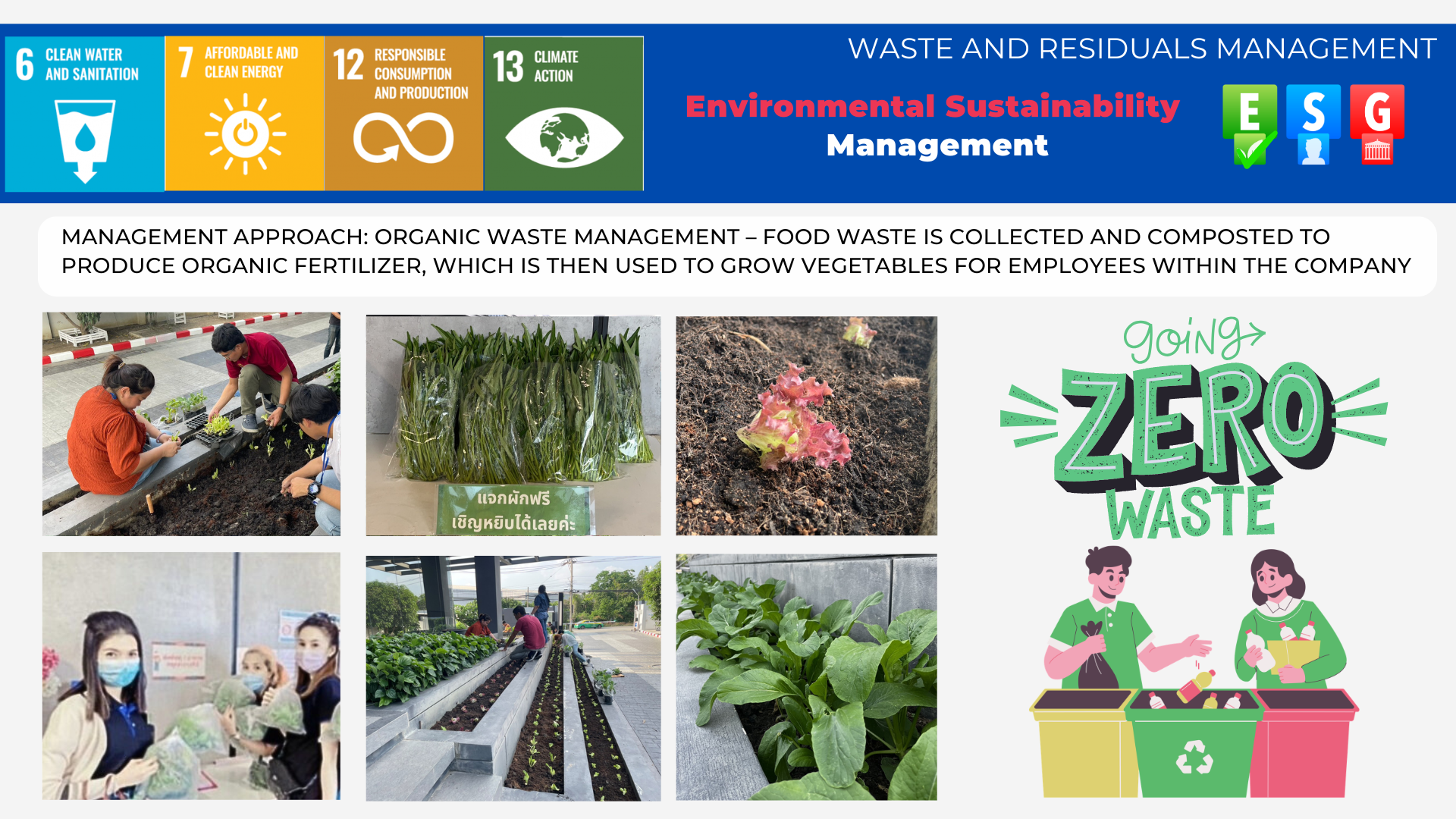
Has Set Targets
Yes
Targets
| Waste Type | Disposal Approach | Target | Base Year | Target Year | Target Change (%) | Unit |
|---|---|---|---|---|---|---|
| Non-hazardous waste | 2758 · Description: Reuse · 2759 · Description: Recycle | Reduce waste volume | 2,023 | 2,030 | 20 | Kilograms |
Waste — Performance & Outcomes
Has Performance Results
Yes
Performance Description
In 2025, Floyd Public Company Limited continuously implemented waste management measures, focusing on reducing waste generation, increasing resource recovery, and controlling environmental impacts across both office operations and project sites. Key initiatives included campaigns to reduce resource consumption, promotion of reuse and recycling practices, systematic waste segregation, and the conversion of office food waste into organic compost to add value and reduce the volume of waste requiring disposal.
In addition, the Company established waste control measures at construction sites, including proper waste segregation, appropriate material storage, and disposal in compliance with relevant legal requirements, to prevent environmental impacts on surrounding communities.
As a result of these efforts, the Company received no complaints from stakeholders regarding waste management, reflecting the effectiveness of its control measures and environmental management practices. Overall, the Company’s waste management performance demonstrates its ability to control environmental impacts, comply with applicable regulations, and foster employee participation, forming a strong foundation for achieving its long-term waste reduction targets.
Greenhouse Gas — Overview
Introduction
Floyd Public Company Limited places strong emphasis on greenhouse gas (GHG) management, recognizing the long-term impacts of climate change on its business operations. The Company therefore focuses on reducing GHG emissions from its activities, while enhancing energy and resource efficiency.
The Company has initiated the development of systems to collect energy and environmental data to support the calculation of its Carbon Footprint for Organization (CFO), representing a key step toward more systematic environmental management. In addition, the Company has implemented GHG reduction measures across multiple areas, including improving energy efficiency, promoting the use of renewable energy, reducing fuel consumption in transportation, and selecting environmentally friendly materials and equipment for its projects.
GHG — Plan & Guidelines
Has a GHG Management Plan
Yes
Plan Description
The Company has established a systematic greenhouse gas (GHG) management plan, covering both direct emission reductions from operations and the integration of low-carbon principles across the entire value chain.
Details of the GHG Management Plan
1.Energy Efficiency
The Company implements energy-saving measures such as transitioning to LED lighting, installing solar cell systems at its headquarters, and promoting efficient energy use. These initiatives help reduce electricity consumption from fossil fuel-based sources.
2.Renewable Energy
The Company promotes the use of clean energy by installing solar rooftop systems to reduce GHG emissions from electricity consumption and increase the share of renewable energy within the organization.
3.Fuel Reduction
The Company enhances transportation and machinery efficiency through route planning and optimization, as well as transitioning certain equipment from fuel-based systems to electric systems (e.g., electric forklifts), thereby reducing reliance on fossil fuels.
4.Green Procurement & Design
The Company adopts environmentally friendly procurement practices and provides recommendations to clients on selecting materials and building systems that improve energy efficiency, such as LED lighting systems and green building concepts.
5.GHG Data & Target Setting
The Company is developing a data collection system to support the calculation of its Carbon Footprint for Organization (CFO) and to prepare for setting future GHG reduction targets. It has also joined the JUMP+ initiative to enhance its sustainability management standards.
6.Engagement & Awareness
The Company encourages employee participation in GHG reduction through campaigns, training, and environmental communication, fostering a low-carbon organizational culture.
Overall, the Company’s GHG management plan reflects a transition from general energy-saving practices to a systematic, data-driven carbon management approach aligned with its business strategy. This approach not only helps reduce costs and environmental risks but also enhances competitiveness and prepares the Company for future ESG and climate-related trends.
GHG — Emissions
GHG Emissions
| Metric | Current Year | Previous Year | Two Years Ago |
|---|---|---|---|
| Total GHG emissions (Metric tonnes of carbon dioxide equivalent) | 52.96 | 59.92 | 57.17 |
| Total greenhouse gas emissions 1 (Metric tonnes of carbon dioxide equivalent) | 6.99 | 6.46 | 12.47 |
| Total greenhouse gas emissions 2 (Metric tonnes of carbon dioxide equivalent) | 43.99 | 43.99 | 40.49 |
| Total greenhouse gas emissions 3 (Metric tonnes of carbon dioxide equivalent) | 1.98 | 9.47 | 4.21 |
GHG — Emissions Verification
Emissions Verified by a Third Party
No
GHG — Principles & Standards
Introduction
Floyd Public Company Limited is in the process of developing its greenhouse gas (GHG) management system, beginning with the collection of data to prepare the Carbon Footprint for Organization (CFO), covering emissions under Scope 1 (direct emissions) and Scope 2 (indirect emissions from electricity consumption).
This initiative aligns with internationally recognized standards and guidelines for GHG management, including the GHG Protocol and the framework of the Thailand Greenhouse Gas Management Organization (TGO). The Company aims to enhance its data management system to ensure accuracy, completeness, and verifiability, in order to support the establishment of future GHG reduction targets and the disclosure of environmental information in accordance with relevant sustainability reporting standards.
Principles & Standards Applied
| Standard |
|---|
| 2671 |
GHG — Targets
Introduction
The Company has established initial greenhouse gas (GHG) reduction targets, focusing on the continuous reduction of operational emissions through improving energy efficiency, reducing fuel consumption, and promoting the use of renewable energy. The Company is currently developing a data collection system to prepare its Carbon Footprint for Organization (CFO), covering Scope 1 and Scope 2 emissions, which will serve as the baseline for setting quantitative targets in the next phase.
In the long term, the Company plans to elevate its GHG reduction targets in alignment with international frameworks, such as carbon neutrality or net zero, taking into consideration the business context and the readiness of its data systems.
Has Set GHG Targets
Yes
GHG Targets — Other Targets
Introduction
Floyd Public Company Limited has established initial greenhouse gas (GHG) reduction targets, focusing on the continuous reduction of operational emissions through improving energy efficiency, reducing fossil fuel consumption, and promoting the use of renewable energy within the organization.
The Company is currently developing a data collection system for energy and environmental performance to prepare its Carbon Footprint for Organization (CFO), covering Scope 1 and Scope 2 emissions. This will serve as the baseline for setting quantitative targets in the next phase, with ongoing monitoring and evaluation of GHG reduction performance.
In the short term, the Company focuses on reducing electricity and fuel consumption, increasing the share of clean energy usage, and improving operational efficiency across business units. In the long term, the Company plans to elevate its GHG reduction targets in alignment with international standards and integrate them into its business strategy to address climate change risks and enhance long-term competitiveness.
These targets reflect the Company’s transition from “energy-saving initiatives” to a “systematic carbon management approach,” using data-driven management to ensure tangible, transparent, and verifiable outcomes over the long term.
Other GHG Targets
| Emission Scope | Base Year | Base Year Emissions | Near-term Target Year | Near-term Target Change (%) | Long-term Target Year | Long-term Target Change (%) | Target Year | Target Change (%) | Unit |
|---|---|---|---|---|---|---|---|---|---|
| 2715 | 2,024 | 50.45 | 2,030 | 5 | 2,050 | 10 | 2,030 | 5 | Metric tonnes of carbon dioxide equivalent |
GHG — Performance & Outcomes
Has Performance Results
No
Performance Description
Floyd Public Company Limited places strong emphasis on systematic greenhouse gas (GHG) management. The Company prepares its Carbon Footprint for Organization (CFO), covering Scope 1, Scope 2, and Scope 3 emissions, to support analysis, planning, and the continuous implementation of GHG reduction measures.
In 2025, the Company’s total GHG emissions amounted to 52.96 tons of carbon dioxide equivalent (tCO2e), decreasing from 59.92 tCO2e in 2024 and 57.17 tCO2e in 2023. This reflects continuous improvements in energy and resource management efficiency. The emissions are categorized as follows: Scope 1 emissions of 6.99 tCO2e, Scope 2 emissions of 43.99 tCO2e, and Scope 3 emissions of 1.98 tCO2e.
The Company has continuously implemented measures to reduce GHG emissions, including improving energy efficiency in offices and project sites, promoting efficient resource utilization, controlling fuel consumption, optimizing operational processes to reduce energy use, and enhancing environmental awareness among employees.
In terms of targets, the Company has set GHG reduction goals for Scope 1 and Scope 2 emissions, using 2024 as the base year (50.45 tCO2e). The Company aims to reduce emissions by 5% by 2030 and by 10% by 2050 compared to the base year.
These initiatives reflect the Company’s commitment to mitigating climate change impacts and conducting environmentally responsible business practices, in alignment with ESG principles, and as a key foundation for sustainable long-term growth.
Environmental Legal Incidents
Number of Incidents — Introduction
During the period 2023–2025, Floyd Public Company Limited reported no cases or incidents of non-compliance with environmental laws or regulations, nor any significant negative environmental impacts (0 cases in each year).
This performance reflects the Company’s strong commitment to strict compliance with applicable environmental laws, regulations, and requirements, as well as the effectiveness of its environmental management systems across both the head office and project sites. The Company places emphasis on a preventive approach to environmental risk management through clearly defined practices, regular monitoring and inspection, and fostering awareness and participation among employees and contractors. This ensures that business operations are conducted responsibly and without adverse impacts on surrounding communities and the environment. Such outcomes help strengthen stakeholder confidence and support the Company’s long-term sustainable development.
Legal Violation Incidents
| Metric | Current Year | Previous Year | Two Years Ago |
|---|---|---|---|
| Number of cases or incidents of legal violations or negative environmental impact (cases) | 0 | 0 | 0 |
Employee Management — Overview
Introduction
In 2025, Floyd Public Company Limited had a total workforce of 196 employees, increasing from 171 employees in 2024. This growth reflects the Company’s business expansion and the continuous increase in workforce demand. The workforce composition consisted of 136 male employees (69%) and 60 female employees (31%).
In terms of age distribution, the majority of employees were in the 30–50 age group, totaling 105 employees (54%), followed by employees under 30 years old at 78 employees (40%), and employees over 50 years old at 13 employees (7%). This structure reflects a workforce primarily in the core working-age group with strong potential to drive the organization forward.
Regarding job levels, the Company had 166 operational-level employees (97.08%), 26 management-level employees (15.20%), and 4 senior executives (2.34%). This structure aligns with the Company’s project-based business model. When analyzed by gender and job level, most male employees were in operational roles (114 employees), while female employees in operational roles totaled 52 employees. Representation across management and senior executive levels remains appropriately distributed, reflecting equal opportunities for career advancement.
In addition, the Company places importance on diversity and social inclusion. In 2025, the Company employed 3 persons with disabilities, representing 1.53% of total employees, an increase from 2 persons in 2024. This demonstrates the Company’s commitment to promoting equal opportunities and inclusive participation within the organization. Overall, the Company’s workforce structure reflects readiness in terms of manpower, employee quality, and diversity, which are key factors supporting sustainable and stable long-term growth.
Employees — Plan & Guidelines
Has an Employee Management Plan
Yes
Plan Description
Floyd Public Company Limited places importance on systematic workforce and labor management, focusing on fair treatment, employee capability development, and the creation of a safe and sustainable working environment. This approach covers both the Company’s employees and workers across its value chain. The key practices implemented during the year are as follows:
1) Fair Compensation
The Company establishes an appropriate and fair compensation and benefits structure in compliance with labor laws and aligned with market conditions. Compensation is determined based on employees’ knowledge, capabilities, experience, and performance. A structured performance evaluation system is in place to fairly assess employee potential and performance, which serves as a basis for salary adjustments, bonuses, and career advancement. Compensation is also reviewed regularly to ensure competitiveness and motivation.
2) Employee Training and Development
The Company continuously promotes employee development at all levels through structured training programs covering professional knowledge, technical skills, and management competencies. It supports lifelong learning and career advancement opportunities. In addition, the Company emphasizes professional certification by supporting employees in obtaining relevant licenses and certifications, such as Professional Engineering Licenses, as well as technical certifications for electricians, air-conditioning technicians, and welders. These initiatives enhance expertise, strengthen organizational competitiveness, and improve service quality.
3) Employee Relations and Engagement
The Company prioritizes employee engagement by encouraging participation through internal activities, two-way communication, and continuous feedback channels. Various initiatives such as sports activities, health promotion programs, and team-building activities are regularly organized to foster collaboration and a positive working environment.
Additionally, the Company provides channels for employee feedback and complaints, including suggestion boxes and internal communication systems, allowing employees to express opinions safely and freely. Feedback is utilized to improve management practices and workplace conditions.
4) Migrant/Foreign Labor
The Company and its business partners employ migrant workers in full compliance with applicable laws, ensuring fair employment contracts, lawful wages, and safe working conditions while respecting fundamental labor rights. The Company strictly prohibits the use of illegal labor and requires all migrant workers to possess valid work documentation. Workers must also undergo skill assessments or competency evaluations to ensure quality, safety, and compliance with professional standards.
5) Child Labor
The Company has a strict policy prohibiting the employment of underage workers below the legal threshold and does not support forced labor or human trafficking in any form. Monitoring and compliance measures are implemented both internally and across the supply chain.
The Company also emphasizes the protection of vulnerable groups, including pregnant employees, by ensuring appropriate and safe working conditions without discrimination, termination, or reduction of benefits due to pregnancy, in accordance with labor laws and human rights principles.
6) Occupational Health and Safety
The Company places the highest priority on occupational health, safety, and working conditions. Operations are conducted in compliance with relevant laws and standards, with preventive measures such as risk assessments, safety training, and continuous monitoring implemented to ensure a safe working environment.
In 2025, total employee working hours amounted to 133,072 hours, increasing from 119,936 hours in 2024, reflecting business expansion. The Company continues to manage safety risks effectively alongside increased operations. Key measures include pre-work risk assessments, safety training for employees and contractors, implementation of safe work procedures, and regular site inspections. The Company aims to achieve “Zero Accident” and continuously strengthen a safety culture across the organization.
The Company continuously monitors and evaluates its workforce and labor management performance to enhance effectiveness. These practices reflect the Company’s commitment to fair labor practices, respect for human rights, and sustainable social development.
Plan Areas
| Plan Area |
|---|
| Fair employee compensation |
| Employee training and development |
| Promoting employee relations and participation |
| Migrant/foreign labor |
| Child labor |
| Occupational health and safety in workplace |
Employees — Workforce
Introduction
Floyd Public Company Limited places strong emphasis on fair employment practices by upholding human rights, equality, and non-discrimination across all aspects of human resource management. This covers the entire employee lifecycle—from recruitment and hiring to compensation, development, and retention—aiming to enhance employee satisfaction and long-term engagement.
In 2025, the Company employed a total of 211 employees, an increase from 174 employees in 2024, reflecting business expansion and growing workforce demand. The workforce structure comprised 70% male and 30% female employees. The Company also promotes diversity and inclusion by employing 3 persons with disabilities, representing 1% of total employees, reinforcing equal employment opportunities.
The Company conducts recruitment and hiring processes in a transparent and fair manner, based on qualifications, competencies, experience, and potential, without discrimination based on gender, age, race, religion, or other personal characteristics. A competitive compensation and benefits structure is established in compliance with labor laws and market practices to attract and retain high-quality talent.
In terms of labor practices, the Company has implemented strict control measures to prevent human rights risks. The Company does not support child labor, forced labor, or illegal labor. Migrant workers must possess valid legal documentation and undergo appropriate skills assessment in accordance with relevant standards. These practices are also extended to contractors and suppliers to ensure compliance with labor standards and human rights principles throughout the value chain.
To mitigate labor-related disputes, the Company has established formal grievance mechanisms, including whistleblowing channels, employee feedback systems, and whistleblower protection measures. Complaints are handled through fair, transparent, and systematic investigation processes. In 2025, there were no reported cases of human rights violations or discrimination. These practices demonstrate the Company’s capability to effectively manage employment, enhance employee trust and satisfaction, minimize labor-related risks, and support sustainable business growth in the long term.
Workforce — Introduction
Floyd Public Company Limited has demonstrated continuous growth in its workforce, in line with business expansion and increasing manpower requirements across various projects. The total number of employees increased from 142 in 2023 to 174 in 2024, and further to 211 in 2025. In terms of gender composition, the number of male employees increased steadily from 96 in 2023 to 116 in 2024 and 147 in 2025. Meanwhile, the number of female employees rose from 46 in 2023 to 58 in 2024 and remained stable at 64 in 2025.
This workforce structure reflects the Company’s ongoing growth while maintaining a balanced and diverse workforce. The Company places strong emphasis on fair employment practices, non-discrimination, and equal opportunity, ensuring that individuals from all groups have access to employment opportunities. These principles form a key foundation in supporting the Company’s sustainable growth in the long term.
Employees with Disabilities — Introduction
Floyd Public Company Limited places strong emphasis on promoting diversity and social inclusion by providing equal employment opportunities for persons with disabilities, in alignment with their capabilities. In 2023, the Company employed 1 person with disabilities, which increased to 2 in 2024 and 3 in 2025, reflecting its continuous commitment to inclusive employment. In 2025, this included 2 male and 1 female employees with disabilities.
All persons with disabilities are employed as full-time employees. The Company does not engage non-employee disabled workers and has not contributed to the Fund for Empowerment of Persons with Disabilities, demonstrating its commitment to providing actual employment opportunities rather than relying on alternative compliance measures.
This approach aligns with the United Nations Sustainable Development Goals (SDGs),particularly:
SDG 8: Decent Work and Economic Growth, by promoting fair and inclusive employment opportunities; and
SDG 10: Reduced Inequalities, by supporting equal access to economic opportunities for persons with disabilities.
These practices reflect the Company’s commitment to reducing inequality, promoting equal opportunity, and fostering inclusive participation across society, which are fundamental to achieving sustainable growth in the long term.
Workforce Data
| Metric | Current Year | Previous Year | Two Years Ago |
|---|---|---|---|
| Total number of employees (Persons) | 211 | 174 | 142 |
| Number of male employees (Persons) | 147 | 116 | 96 |
| Number of female employees (Persons) | 64 | 58 | 46 |
| Total employment of disabled persons (people) | 3 | 2 | 1 |
| Total disabled employees (people) | 3 | 2 | 1 |
| Total male disabled employees (people) | 2 | 2 | 1 |
| Total female disabled employees (people) | 1 | 0 | 0 |
| Total disabled workers who are non-employee (people) | 0 | 0 | 0 |
| Contributions to the fund for promoting and improving the quality of life for disabled persons | 0 | 0 | 0 |
| Total number of male employees in operational level (Persons) | 124 | 96 | 82 |
| Total number of male employees in management level (Persons) | 21 | 17 | 11 |
| Total number of male employees in executive level (Persons) | 2 | 3 | 3 |
| Total number of female employees in operational level (Persons) | 58 | 48 | 41 |
| Total number of female employees in management level (Persons) | 4 | 8 | 3 |
| Total number of female employees in executive level (Persons) | 2 | 2 | 2 |
Employees — Remuneration & Provident Fund
Introduction
Floyd Public Company Limited places strong emphasis on establishing a fair, transparent, and performance-based compensation system, aligned with employees’ capabilities and prevailing labor market conditions, in order to motivate and retain high-quality personnel over the long term.
In 2023, the Company’s total employee compensation amounted to THB 64,084,520, increasing to THB 95,853,288 in 2024 and THB 106,611,709 in 2025. This reflects the Company’s business growth and the continuous expansion of its workforce. When classified by gender, compensation for male employees increased from THB 45,411,338 in 2023 to THB 68,090,436 in 2024 and THB 75,173,929 in 2025. Meanwhile, compensation for female employees increased from THB 18,673,182 in 2023 to THB 27,762,852 in 2024 and THB 31,437,780 in 2025. Such changes are consistent with the increase in the number of employees, business expansion, and the Company’s compensation management policy, which is aligned with its operating performance in each period.
The Company determines its compensation structure based on principles of fairness and non-discrimination, taking into account job roles, responsibilities, and individual performance. Compensation is reviewed regularly to remain competitive in the labor market and to enhance employee satisfaction. On a per capita basis, compensation is determined by role and performance without gender bias. The overall compensation structure between male and female employees is considered appropriate and aligned with job characteristics and workforce composition.
The Company continuously monitors and evaluates compensation differences (pay gap) to ensure fairness and transparency. Overall, the level of compensation disparity remains within an appropriate range and is comparable to industry peers. This approach reflects the Company’s commitment to promoting pay equity and non-discrimination, in alignment with human rights principles and international ESG standards, and serves as a key driver in strengthening employee engagement and supporting sustainable long-term growth.
Remuneration & Provident Fund
| Metric | Current Year | Previous Year | Two Years Ago |
|---|---|---|---|
| Total disabled employees (people) | 106,611,709 | 94,347,054 | 64,084,520 |
| Total male employee remuneration (Baht) | 75,173,929 | 67,090,118 | 45,411,338 |
| Total female employee remuneration (Baht) | 31,437,780 | 27,256,936 | 18,673,182 |
| Number of employees eligible to participate in PVD (persons) | 211 | 174 | 142 |
| Total number of employees joining employee provident fund (Persons) | 68 | 72 | 80 |
| Percentage of total number of employees joining employee provident fund to total number of employees (%) | 32.23 | 41.38 | 56.34 |
| Number of PVD members / Total eligible employees (%) | 32.23 | 41.38 | 56.34 |
| Total amount of provident fund contributed by the Company (Baht) | 1,388,670 | 1,405,810 | 1,322,675 |
| Total amount of provident fund contributed by employee (baht) |
Employees — Training & Development
Introduction
Floyd Public Company Limited places strong emphasis on continuous employee development to enhance organizational competitiveness and support long-term business growth. The Company has established structured training plans covering professional knowledge, technical skills, and management capabilities, while also promoting lifelong learning.
In 2025, the Company continued to implement training programs to develop employees’ skills and competencies, with an average of 6.80 training hours per employee per year, compared to the target of not less than 8 hours per employee per year. In comparison, the average training hours were 28.08 hours in 2023 and 25.92 hours in 2024.
In terms of investment, the Company allocated THB 599,216 for employee training and development in 2023, decreasing to THB 392,320 in 2024 and THB 228,785 in 2025. This change aligns with the Company’s cost management approach and a strategic shift toward in-house training and knowledge transfer from internal experts.
The Company focuses on aligning employee development with career progression pathways, while supporting the enhancement of job-related knowledge and skills. This includes encouraging employees to obtain relevant professional certifications to elevate competency standards. These efforts reflect the Company’s commitment to systematic human capital development. Although the average training hours in 2025 were below the established target, the Company has plans to further improve the effectiveness of its development programs to achieve its targets and support sustainable growth in the long term.
Training Data
| Metric | Current Year | Previous Year | Two Years Ago |
|---|---|---|---|
| Average employee training hours (Hours / Person / Year) | 6.8 | 25.92 | 28.08 |
| Employee development and training expenses (baht) | 228,785 | 392,320 | 599,216 |
Employees — Occupational Health & Safety
Introduction
Floyd Public Company Limited places the highest priority on occupational health, safety, and working environment. The Company is committed to continuously improving operational efficiency to minimize risks of illness, injury, or fatality, while enhancing the quality of life for employees and workers across all project sites.
The Company operates in compliance with applicable laws and standards, and has implemented an occupational health and safety management system to effectively control and prevent risks. Key initiatives include risk assessment and analysis, implementation of risk control measures, regular safety training, safety awareness activities such as Safety Talk and Safety Week, and the provision of adequate and appropriate personal protective equipment (PPE).
In addition, the Company has established an Occupational Health, Safety and Environment Committee (Safety Committee) to oversee, monitor, and drive systematic safety management. Employee participation is also actively encouraged to foster a strong safety culture within the organization.
From 2023 to 2025, the Company recorded zero cases of work-related injuries resulting in lost time (Lost Time Injury), reflecting the effectiveness of its safety measures and risk management practices. The Company has set a “Zero Accident” target and continues to enhance preventive measures to maintain high safety standards. These practices demonstrate the Company’s strong commitment to safeguarding the health and safety of its workforce, reducing workplace risks, and supporting responsible and sustainable business operations in the long term.
Occupational Health & Safety Data
| Metric | Current Year | Previous Year | Two Years Ago |
|---|---|---|---|
| Total number of lost time injury incidents by employees (Cases) | 0 | 0 | 0 |
Employees — Labour Relations
Introduction
Floyd Public Company Limited places strong emphasis on fostering employee engagement and participation to build a strong organizational culture and support sustainable long-term growth. The Company has continuously implemented employee engagement development initiatives, focusing on promoting two-way communication, actively listening to employee feedback, organizing internal activities such as health, sports, and team-building programs, and providing channels for suggestions and grievances to encourage employee involvement in organizational development.
In 2025, the Company recorded 47 voluntary resignations, representing a turnover rate of 23.98%, an increase from 19.88% in 2024 and 8.45% in 2023. This trend is consistent with business expansion and increased competition in the labor market. The Company has conducted analyses of resignation factors and continuously applied the insights to improve its human resource management practices.
Despite the increase in turnover, the Company has maintained employee engagement at a “good” level consistently from 2023 to 2025, reflecting the effectiveness of its human resource policies and employee care initiatives. These practices help mitigate labor dispute risks, enhance employee satisfaction, and strengthen the Company’s ability to attract and retain talented personnel, which are key drivers of sustainable organizational growth in the long term.
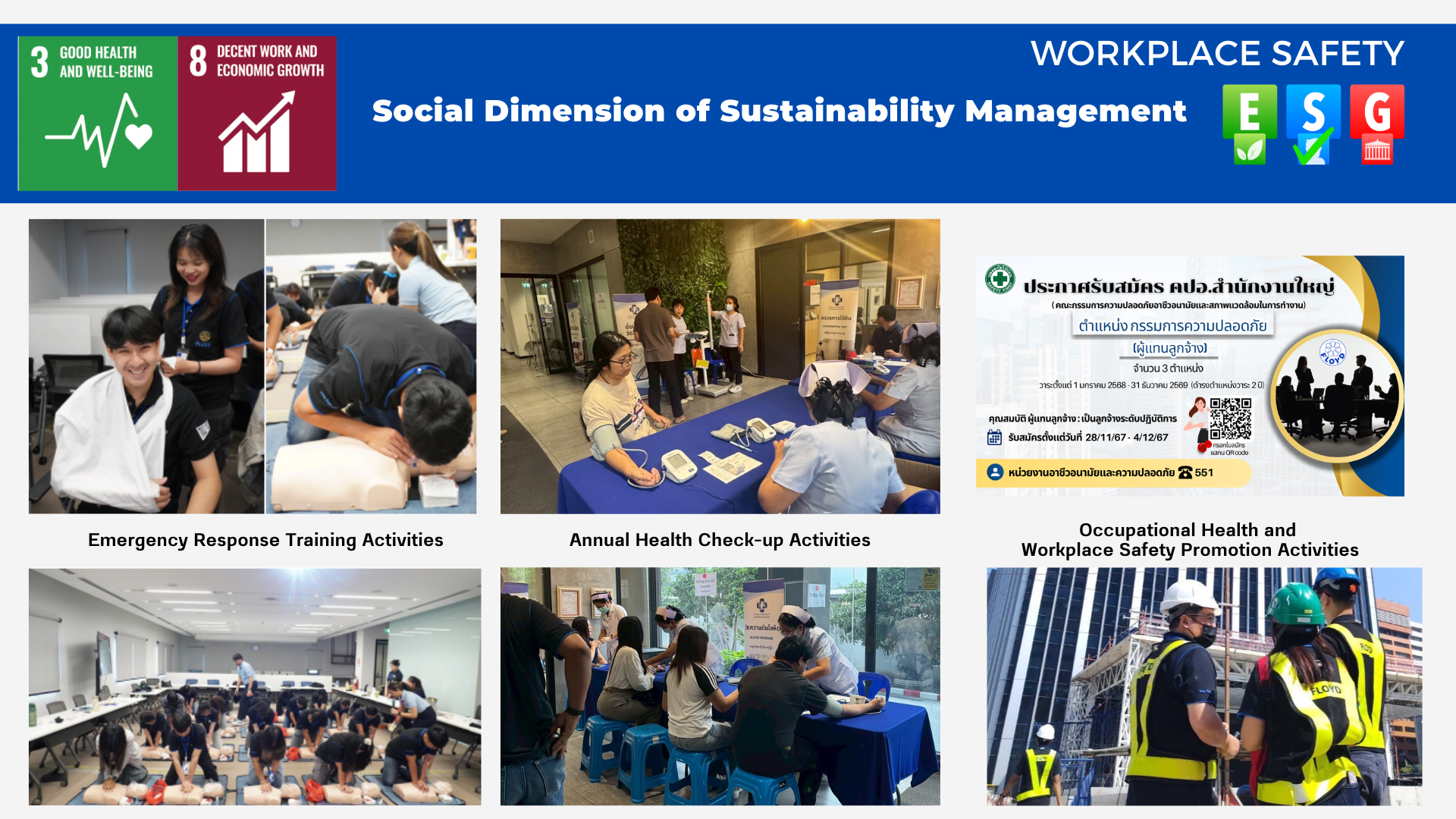
Labour Relations Data
| Metric | Current Year | Previous Year | Two Years Ago |
|---|---|---|---|
| Total voluntary resignations (Persons) | 47 | 34 | 12 |
| Male employees who voluntary resigned (Persons) | 29 | 25 | 8 |
| Female employees who voluntary resigned (Persons) | 18 | 9 | 4 |
| Percentage of employee turnover leaving the Company voluntarily (%) | 23.98 | 19.54 | 8.45 |
| Evaluation result of employee engagement | 1 | 1 | 1 |
Employees — Employee Representation
Introduction
Floyd Public Company Limited places strong emphasis on promoting employee participation and internal representation, providing opportunities for employees to express their opinions, propose improvement initiatives, and contribute to decisions related to welfare and working conditions.
The Company has established internal employee representation mechanisms through organizational committees, including the Occupational Health, Safety and Work Environment Committee (Safety Committee). This committee plays a key role in overseeing, promoting, and monitoring occupational health, safety, and working environment practices in a systematic manner.
The committee consists of representatives from both management and employees to ensure balanced participation. Its responsibilities include reviewing safety measures, preventing workplace accidents, improving working conditions, and gathering employee feedback to drive continuous improvement.
This approach reflects the Company’s commitment to promoting employees’ rights to participation, ensuring transparency in management practices, and fostering a safe and appropriate working environment. It also contributes to strengthening employee engagement and supporting the Company’s sustainable long-term growth.
Employees Are Represented Collectively
Yes
Forms of Representation
| Form | Other — Please Specify |
|---|---|
| Welfare committee | |
| Employee committee | |
| Others | Safety Committee (Occupational Health, Safety and Work Environment Committee) |
Employees — Targets
Introduction
Floyd Public Company Limited has established concrete targets for employee and labor management, aligned with its corporate strategy and ESG approach, to enhance workforce quality, strengthen workplace safety, and promote fair practices throughout the value chain. The Company’s key targets cover the following core areas:
Has Set Employee Targets
Yes
Targets
| Indicator | Target Areas | Base Year | Base Year — Description | Target Year | Target Year — Description |
|---|---|---|---|---|---|
| No complaints related to discrimination | 2989 · Description: Non-discrimination | 2,023 | No complaints | 2,030 | No complaints |
| Average training hours of not less than 8 hours per person per year. | 2984 · Description: Employee training and development | 2,023 | Average employee training hours: 28.08 hours/person/year. | 2,030 | Average training hours per employee: 8 hours/person/year. |
| Lost Time Injury Frequency Rate (LTIFR) | 2988 · Description: Safety and occupational health at work | 2,023 | No lost-time injury | 2,030 | Reduced by ≥ 50% or achieving Zero Accident |
| Employee Engagement Score | 2985 · Description: Promoting employee relations and participation | 2,024 | 80% | 2,030 | Not less than 85% |
| Labor Law Compliance Rate (Employees & Contractors) | 2986 · Description: Migrant/foreign labor · 2987 · Description: Child labor | 2,024 | 100% | 2,030 | 100% |
Employees — Performance & Outcomes
Has Performance Results
Yes
Performance Description
In 2025, Floyd Public Company Limited systematically managed its employees and workforce by upholding human rights, fairness, and occupational safety across the entire value chain, alongside continuous talent development and the creation of a sustainable working environment.
Human Rights and Equality
The Company reported no complaints related to human rights violations or discrimination, and there was no use of forced labor or child labor. Continuous oversight is applied both internally and across the supply chain, supported by grievance mechanisms, investigation processes, and appropriate remediation measures. The Company also promotes diversity and inclusion, with the employment of three persons with disabilities and a balanced compensation structure between genders, reflecting equitable treatment across the organization.
Social Contribution and Human Capital Development
The Company expanded its role in social responsibility and human capital development through partnerships (MOU) with educational institutions and the provision of dual vocational training programs, contributing to the development of skilled workforce for the industry. The Company also participated in the ESG DNA program organized by the Stock Exchange of Thailand to enhance its sustainability capabilities. In addition, the Company continuously carried out social initiatives, such as donating used calendars for Braille production for the visually impaired and contributing aluminum materials to support prosthetic limb projects in collaboration with government agencies, reflecting its commitment to creating shared value.
Corporate Health Promotion
The Company received recognition for its workplace health initiatives through the “Healthy Organization” award from the Thai Health Promotion Foundation (ThaiHealth) and the Thai Healthy Weight Network. This reflects the Company’s commitment to employee well-being. The Company also organized ongoing safety campaigns, including Safety Week and other safety awareness activities.
Employee Development
The Company continuously invests in employee development. In 2025, a total of 59 training programs were conducted (35 in-house and 24 external), totaling 6,340 training hours. The Company also supports career advancement, with 7 employees promoted from Assistant Engineer to Engineer and 1 employee promoted from Engineer to Senior Engineer.
Employee Engagement and Well-being
The Company places strong emphasis on fostering a positive working environment by providing comprehensive welfare benefits, including health insurance, annual health check-ups, provident fund, and additional benefits. Employee engagement is further enhanced through wellness programs, sports activities, and internal relationship-building initiatives, contributing to overall employee satisfaction and organizational commitment.
Overall, these results demonstrate the Company’s effective management of employees and labor across key dimensions, including human rights, talent development, workplace safety, and social responsibility. This strengthens stakeholder confidence and forms a solid foundation for sustainable long-term growth.
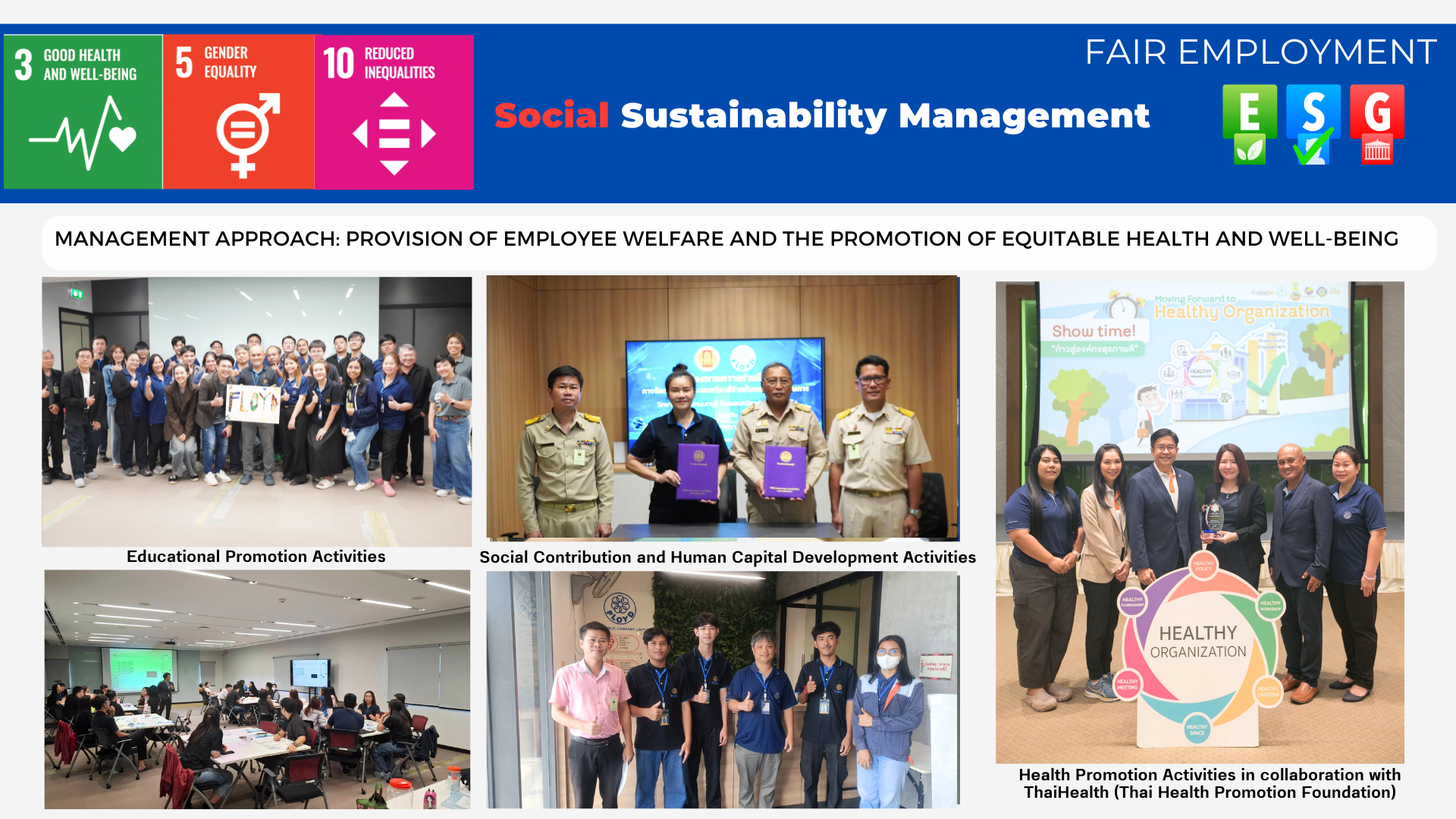
Customer Management — Overview
Introduction
Floyd Public Company Limited has established a systematic customer management plan, focusing on enhancing customer satisfaction, building trust, and fostering long-term relationships. This is undertaken alongside responsible, transparent, and professional business practices, covering the entire operational process from project proposal and execution to project delivery and after-sales services.
The Company has defined key operational approaches as follows:
1. Responsible Service Delivery
The Company is committed to delivering building engineering (M&E) works in accordance with engineering principles, ensuring quality, compliance with standards, timely delivery, and safety as a priority. A comprehensive quality control system is implemented at every stage of the project, from planning, procurement of materials and equipment, contractor selection, installation, to project handover. This includes inspections and system testing in collaboration with clients to ensure that all work meets specified requirements and expectations.
2. Transparent and Effective Communication
The Company emphasizes accurate, complete, and timely communication by leveraging information technology in project management, including planning, budget control, and progress monitoring. This enables customers to access information transparently and stay informed of project progress and any potential impacts.
3. Customer Satisfaction and Relationship Development
The Company continuously conducts customer satisfaction surveys and analyzes the results to improve various aspects of its operations, including work quality, personnel service, and operational processes. In addition, communication channels are continuously enhanced to effectively capture feedback and strengthen long-term customer relationships.
4. Customer Data Protection
The Company strictly protects customers’ personal data in compliance with applicable laws and standards. Measures are in place to control data access, ensure secure storage, and regulate appropriate use, preventing data leakage or misuse. These practices reflect the Company’s commitment to delivering professional engineering services, enhancing customer satisfaction and trust, and supporting sustainable long-term growth.
Customers — Plan & Guidelines
Has a Customer Management Plan
Yes
Plan Description
Floyd Public Company Limited operates under its vision to be a leader in building engineering systems (M&E) by delivering high-quality, standardized, and safe services within defined budgets. The Company places strong emphasis on systematic customer management to enhance customer satisfaction, build trust, and foster long-term relationships.
The Company has established a comprehensive customer management plan covering the entire operational process, with key approaches as follows:
1) Responsible Service Delivery
The Company prioritizes delivering high-quality work at every stage of the project lifecycle, from planning, procurement of materials and equipment, contractor selection, installation, to project handover. Strict quality control and inspection processes are implemented, including system testing in collaboration with project owners, such as electrical systems, air conditioning systems, and wastewater treatment systems, to ensure compliance with required standards. The Company also provides warranties and ensures prompt and effective rectification of any defects.
2) Communication of Product and Service Impacts
The Company emphasizes transparent communication by utilizing information technology in project management, including planning, budget control, and progress tracking. Effective communication and coordination are maintained with clients, contractors, and relevant stakeholders to ensure that customers are fully informed of project status and potential impacts.
3) Customer Satisfaction and Relationship Development
The Company continuously conducts customer satisfaction surveys. In 2025, the customer satisfaction score was 81.37%, rated at the “highest satisfaction” level, with no complaints received from stakeholders. Survey results are systematically analyzed and used to improve operations across various aspects, including personnel, operational processes, occupational health and safety, materials and equipment, and service quality. In addition, the Company provides multiple communication channels to promptly receive feedback and complaints, and utilizes such information to further enhance its customer management practices.
4) Customer Data Protection
The Company places high importance on the protection of customers’ personal data by complying with applicable laws and standards. Measures are implemented to control access, ensure secure data storage, and govern appropriate data usage to prevent data breaches or misuse.
Plan Areas
| Plan Area |
|---|
| Responsible production and services for customers |
| Communication of product and service impacts to customers/consumers |
| Development of customer satisfaction and customer relationship |
| Protection of customer personal information |
Customers — Satisfaction Results
Introduction
Floyd Public Company Limited places strong emphasis on continuously assessing and improving customer satisfaction. Customer satisfaction results are used as a key tool to reflect service quality and operational effectiveness. The Company conducts customer satisfaction surveys on an annual basis, covering key aspects such as work quality, timely delivery, communication, personnel service, and safety standards. The insights obtained are systematically analyzed and used to drive continuous improvements in operations.
Customer satisfaction results from 2023 to 2025 have been applied to enhance and strengthen operational processes across various areas, including service quality, project management, and employee capability development. This enables the Company to better meet customer needs and expectations. These practices reflect the Company’s commitment to enhancing customer satisfaction, building trust, and continuously strengthening business relationships, which are key drivers of sustainable long-term growth.
Customer Satisfaction Results
| Metric | Current Year | Previous Year | Two Years Ago |
|---|---|---|---|
| Evaluation results of customer satisfaction | 1 | 1 | 1 |
Customers — Targets
Introduction
Floyd Public Company Limited has established clear customer management targets, focusing on enhancing customer satisfaction and strengthening customer relationships to support sustainable business growth and build long-term trust.
The Company has defined its key performance indicator as Customer Satisfaction, which reflects service quality and operational effectiveness. The baseline was set at 85% in 2023, with a target to increase to 90% by 2030. To achieve this target, the Company has continuously implemented improvement initiatives across multiple areas, including enhancing service quality, developing employee capabilities, improving operational efficiency, and strengthening customer communication systems. In addition, customer satisfaction survey results are systematically analyzed and used as a basis for continuous operational improvement.
These initiatives reflect the Company’s commitment to elevating customer experience, building strong customer relationships, and enhancing competitiveness, which are key drivers of sustainable long-term growth.
Has Set Customer Targets
Yes
Targets
| Indicator | Target Areas | Base Year | Base Year — Description | Target Year | Target Year — Description |
|---|---|---|---|---|---|
| Customer satisfaction with the company's services | 3009 · Description: Development of customer satisfaction and customer relationship | 2,023 | 85% | 2,030 | 90 % |
Customers — Performance & Outcomes
Has Performance Results
Yes
Performance Description
Floyd Public Company Limited, as a contractor specializing in building engineering systems (M&E), places strong emphasis on delivering high-quality, standardized, timely, and safe work within defined budgets, in order to build long-term customer satisfaction and trust.
The Company adopts a systematic approach to project management, covering all stages from planning, procurement of materials and equipment, and selection of qualified and experienced contractors, to the use of modern, safe, and standardized machinery and equipment. This enables the Company to deliver projects that enhance the quality of life for end users.
In addition, the Company leverages information technology in project management, including project planning, budget control, and progress tracking. It also conducts joint testing with project owners—such as electrical systems, air conditioning systems, and wastewater treatment systems—to ensure compliance with required standards. The Company continuously measures customer satisfaction and utilizes the results to systematically improve its operations.
In 2025, the Company achieved a customer satisfaction score of 81.37%, rated at the “highest satisfaction” level, with no complaints received from stakeholders, reflecting the quality of its services and operational effectiveness.
Furthermore, the Company received the “Excellent Collaboration Award” from Huawei Technologies (Thailand) Co., Ltd. on December 19, 2025, for the Damac Data Center project in Thailand. This award recognizes outstanding collaboration in the development of infrastructure and digital solutions, highlighting the Company’s capability and excellence at an international level. These practices reflect the Company’s commitment to continuously delivering value to customers, building trust, and strengthening long-term business relationships, which are key drivers of sustainable organizational growth.
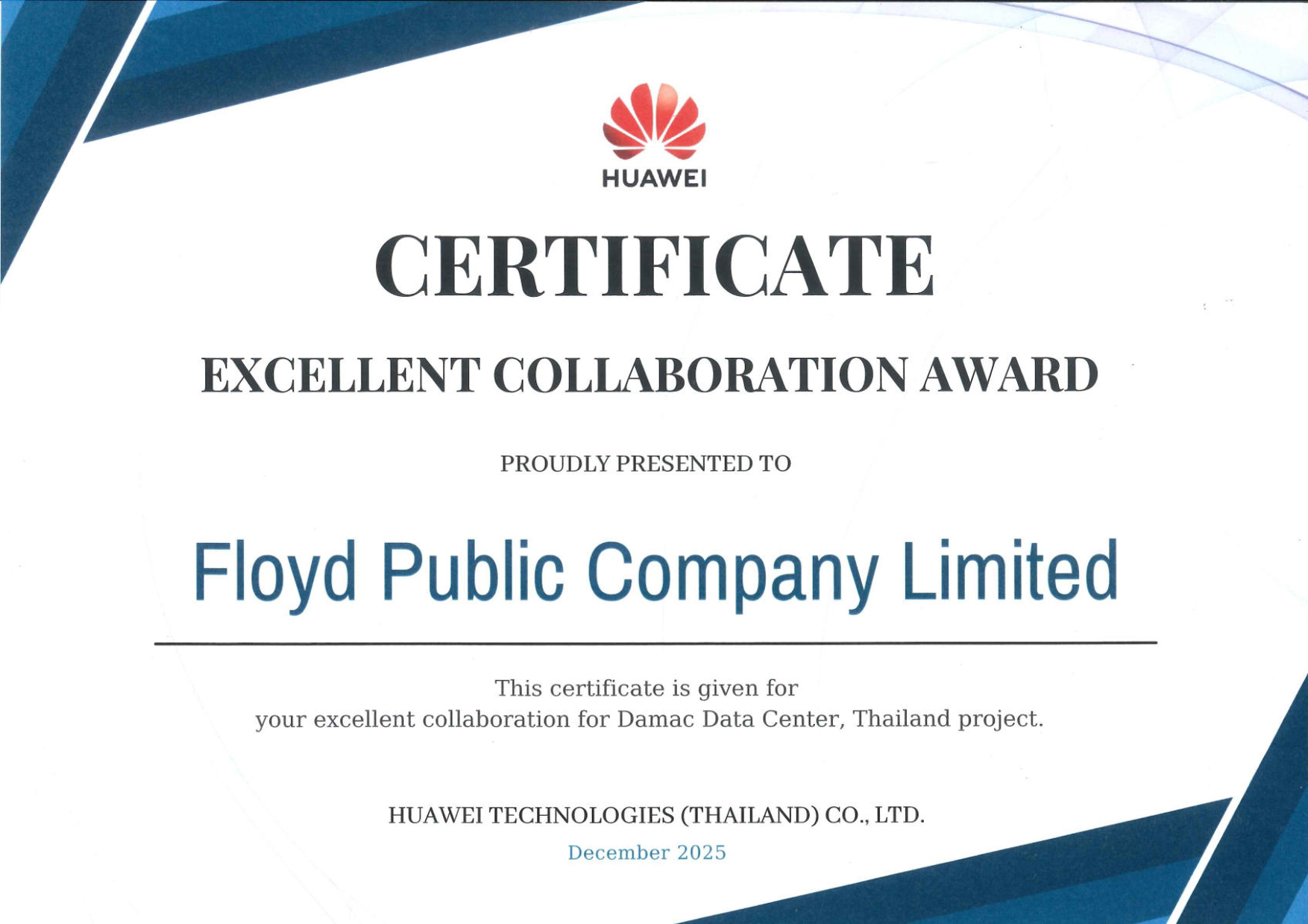
Community & Social — Overview
Introduction
Floyd Public Company Limited places strong emphasis on conducting its business alongside social and community responsibility. The Company is committed to minimizing potential impacts from its operations while creating shared value for stakeholders in all areas where it operates.
The Company recognizes that building engineering system (M&E) operations may impact surrounding communities in terms of environment, noise, dust, and safety. Therefore, appropriate mitigation and control measures have been implemented, including pollution control, waste management, and ensuring the safety of nearby communities, as well as strict compliance with relevant laws and regulations.
In addition, the Company continuously undertakes corporate social responsibility (CSR) activities, focusing on supporting disadvantaged groups and improving quality of life. Key initiatives include donating used calendars for conversion into Braille materials for the visually impaired, and donating aluminum to support the Royal Prostheses Project in collaboration with government agencies. These initiatives help enhance accessibility and improve the quality of life for persons with disabilities in a tangible way.
These practices are aligned with the United Nations Sustainable Development Goals (SDGs), particularly:
SDG 3: Good Health and Well-being, by supporting access to medical aids and improving the quality of life for persons with disabilities
SDG 11: Sustainable Cities and Communities, by contributing to community development and promoting sustainable living environments
These approaches reflect the Company’s commitment to responsible business practices, minimizing negative impacts while creating positive social outcomes. They also form a key foundation for sustainable long-term growth.
Community & Social — Plan & Guidelines
Has a Community & Social Plan
Yes
Plan Description
Floyd Public Company Limited places strong emphasis on conducting its business alongside social and community responsibility. The Company is committed to creating shared value for stakeholders in all areas where it operates, recognizing that business growth must go hand in hand with sustainable social development. Accordingly, the Company has established a systematic community and social management approach, covering workforce development, education, support for vulnerable groups, and the reduction of social inequalities.
The Company operates with consideration for both direct and indirect impacts on communities, while providing channels for ongoing communication to receive feedback, suggestions, and complaints. This enables continuous improvement in operations in alignment with community needs and fosters positive relationships between the Company and surrounding communities.
During the year, the Company implemented key initiatives as follows:
1. Employment and Skills Development (SDG 8: Decent Work and Economic Growth)
The Company promotes workforce development by providing internship opportunities for students in relevant fields, enabling them to gain hands-on experience and develop professional skills through real project work. Knowledge transfer from industry experts helps prepare students for the labor market and supports quality employment in the long term.
2. Education (SDG 4: Quality Education)
The Company supports educational development through collaboration with academic institutions, provision of educational resources, and participation in work-integrated learning programs. These initiatives enhance learning quality and promote equal access to education.
3. Support for Vulnerable and Disadvantaged Groups (SDG 10: Reduced Inequalities)
The Company conducts activities to improve the quality of life for disadvantaged groups, such as donating used calendars to be converted into Braille materials for the visually impaired and donating reusable items through the “Luea-Kor” project. These initiatives promote resource efficiency while supporting those in need.
4. Occupational Health, Safety, Well-being, and Quality of Life
The Company promotes health, safety, and a suitable living environment both within the organization and in surrounding communities, contributing to improved quality of life and the development of safe and livable communities.
5. Reducing Social Inequalities (SDG 10: Reduced Inequalities)
The Company is committed to reducing social inequalities by expanding access to education, enhancing vocational skills, and supporting vulnerable groups, enabling equitable access to economic and social opportunities.
These initiatives are aligned with the United Nations Sustainable Development Goals (SDGs), particularly SDG 4 (Quality Education), SDG 8 (Decent Work and Economic Growth), and SDG 10 (Reduced Inequalities). They reflect the Company’s commitment to contributing to social development in a tangible way. The Company believes that expanding educational opportunities, developing skills, and reducing inequalities are fundamental to sustainable social development and key drivers supporting long-term business growth.
Plan Areas
| Plan Area |
|---|
| Employment and professional skill development |
| Education |
| Religion and culture |
| Forests and natural resources |
| Occupational health, safety, health, and quality of life |
| Disadvantaged and vulnerable groups |
| Reducing inequality and promoting social equality |
Community & Social — Targets
Introduction
Floyd Public Company Limited has established clear and measurable goals for community and social management, aligned with the Company’s strategic direction and ESG framework. These goals aim to create shared value and enhance the quality of life of stakeholders in the long term. The Company focuses on key areas including the promotion of education and vocational skill development, support for disadvantaged and vulnerable groups, improvement of quality of life, and the reduction of social inequalities. Key Performance Indicators (KPIs) have been defined to enable systematic monitoring, evaluation, and continuous improvement of performance.
The Company’s key objectives include:
Expanding access to education and continuous development of professional skills for youth and students
Supporting and improving the quality of life of disadvantaged and vulnerable groups
Promoting efficient use of resources to generate social value
Reducing social inequalities by creating equal opportunities
The Company has established a base year for performance tracking and set both short-term and long-term targets to systematically measure progress. Performance results are regularly analyzed and used to enhance operational approaches on an ongoing basis. These initiatives are aligned with the United Nations Sustainable Development Goals (SDGs), particularly SDG 4 (Quality Education), SDG 8 (Decent Work and Economic Growth), and SDG 10 (Reduced Inequalities), reflecting the Company’s commitment to contributing to sustainable social development.
The Company believes that clearly defined and measurable targets will enhance the effectiveness of its social management, create tangible positive impacts, and support sustainable business growth alongside long-term social development.
Has Set Community & Social Targets
Yes
Targets
| Indicator | Target Areas | Base Year | Base Year — Description | Target Year | Target Year — Description |
|---|---|---|---|---|---|
| impacts from construction projects on surrounding communities, with a target of achieving zero complaints related to community and social management. | 3041 · Description: Occupational health, safety, health, and quality of life · 3045 · Other name: Impacts from construction projects · Description: Others | 2,023 | zero complaints (0 cases) | 2,030 | zero complaints (0 cases) |
| Number of educational support programs and partnerships | 3037 · Description: Education | 2,025 | Conducted two collaborative programs with educational institutions.
| 2,030 | Conducted two collaborative programs with educational institutions.
|
| Number of initiatives supporting vulnerable groups | 3042 · Description: Disadvantaged and vulnerable groups | 2,025 | Conducted two activities (e.g., donating calendars and other items). | 2,030 | At least 4 activities per year. |
Community & Social — Performance & Outcomes
Has Performance Results
Yes
Performance Description
In 2025, Floyd Public Company Limited systematically managed community and social aspects by focusing on minimizing impacts from project operations while creating shared value for communities and society. The Company emphasized vocational skill development, educational support, and continuous assistance to disadvantaged groups.
Management of Impacts from Construction Projects
The Company implemented strict measures to control impacts on surrounding communities, including noise, dust, and safety. Activities that could cause disturbances during inappropriate hours were avoided. In addition, multiple complaint channels—such as email, telephone, website, and online platforms—were established to ensure that feedback could be received and addressed promptly and effectively. In 2025, the Company recorded zero complaints related to community and social management (0 cases), in line with its targets.
Education and Skills Development
The Company continuously collaborated with educational institutions. In 2025, it signed a Memorandum of Understanding (MOU) with Nonthaburi Technical College to support dual vocational education programs. The Company also provided internship opportunities in electrical engineering, enabling students to gain hands-on experience by working alongside professional teams, thereby enhancing their skills and preparing them for the labor market.
Support for Disadvantaged Groups and Society
The Company carried out ongoing social initiatives, including donating items to children, youth, and disadvantaged groups, as well as supporting educational institutions for underprivileged students. These efforts aim to expand access to education and improve the quality of life of beneficiaries.
These results reflect the Company’s ability to effectively manage community and social aspects, including minimizing operational impacts, expanding educational opportunities, and supporting society. Such efforts strengthen stakeholder confidence and form a key foundation for sustainable long-term growth.
Other Social Management
Plan & Outcomes — Description
Floyd Public Company Limited places importance on other social dimensions that support sustainable organizational development, beyond employee, customer, and community management. The Company focuses on fostering an ethical corporate culture, promoting awareness of safety and health, and conducting business with overall social responsibility.
In terms of planning, the Company has established initiatives to promote knowledge and awareness in occupational health and safety (Occupational Health and Safety Awareness), as well as emergency preparedness. Training programs and awareness campaigns are regularly organized to enhance safety knowledge and behaviors among employees and relevant stakeholders.
In terms of performance, the Company implemented key activities, including:
Emergency response training activities to enhance the ability to handle emergency situations correctly and safely
Annual health check-up activities to monitor and promote employee health
Occupational health and workplace safety promotion activities to continuously strengthen a safety culture within the organization
In terms of outcomes, these initiatives have increased employee awareness of health and safety, reduced risks of accidents and incidents, and promoted safer working behaviors. They have also contributed to enhancing the Company’s operational standards in alignment with ESG principles and strengthening its reputation for social responsibility.
These efforts reflect the Company’s commitment to holistic organizational development, placing importance on social dimensions at all levels and supporting sustainable growth in the long term.
Law Violation Incidents
Introduction
Floyd Public Company Limited places strong emphasis on conducting its business in accordance with good corporate governance, respect for human rights, and strict compliance with applicable laws and regulations. The Company has established policies, guidelines, and internal control measures to prevent risks related to rights violations across all dimensions, covering employees, customers, business partners, and communities.
During the period 2023–2025, the Company reported no significant incidents of non-compliance with social or human rights laws and regulations (0 cases). There were also no cases of labor disputes, consumer rights violations, partner rights violations, or community-related disputes. In addition, the Company recorded no incidents related to data security, such as customer data breaches, or occupational health and safety incidents.
These results reflect the effectiveness of the Company’s risk management system, good corporate governance practices, and adherence to human rights principles. They contribute to minimizing dispute-related risks, strengthening stakeholder confidence, and supporting transparent, responsible, and sustainable business operations in the long term.
Law Violation Incidents
| Metric | Current Year | Previous Year | Two Years Ago |
|---|---|---|---|
| The total number of cases or incidents of significant violations of laws or regulations regarding social and human rights (Cases) | 0 | 0 | 0 |
| The total number of cases or incidents that cause significant labor disputes (Cases) | 0 | 0 | 0 |
| The total number of cases or complaints related to consumer rights violations (Cases) | 0 | 0 | 0 |
| The total number of cases or complaints related to partner rights violations (Cases) | 0 | 0 | 0 |
| The total number of cases or incidents that cause disputes with the community/society (Cases) | 0 | 0 | 0 |
| The total number of cases or incidents related to cyber security or customer data breaches (Cases) | 0 | 0 | 0 |
| The total number of cases or incidents related to safety and occupational health at work (Cases) | 0 | 0 | 0 |